Crockpot Chicken and Kale (Soup)
In the realm of home cooking, few things offer the same level of satisfaction as a bubbling pot of soup. When that soup is a Crockpot Chicken and Kale Soup, you aren’t just making a meal; you are crafting a nutritional powerhouse that warms the soul and fuels the body. This dish has become a staple in American kitchens, particularly for those seeking a balance between a busy lifestyle and a commitment to healthy eating.
The beauty of the slow cooker—or the “Crockpot”—is its ability to transform humble, raw ingredients into a complex, harmonious masterpiece through the passage of time. By the time you come home from work or finish your daily errands, your house is filled with the intoxicating aroma of garlic, savory chicken, and earthy herbs.
This comprehensive guide will walk you through every facet of creating the perfect Chicken and Kale Soup, from selecting the finest ingredients to mastering the art of the slow cook.
Why This Soup is the Ultimate Comfort Food
Comfort food often gets a bad reputation for being heavy, greasy, or nutrient-poor. However, Chicken and Kale Soup flips the script. It provides the “hug in a bowl” feeling of traditional chicken noodle soup but replaces empty carbohydrates with nutrient-dense superfoods.
The Science of Slow Cooking
Slow cooking at a low, consistent temperature allows the connective tissues in the chicken to break down gradually. This process, known as collagen hydrolysis, results in incredibly tender meat and a broth that is rich in gelatin. Gelatin is renowned for supporting gut health, joint function, and skin elasticity.
Furthermore, the “set it and forget it” nature of the Crockpot reduces the stress of meal preparation. In a fast-paced world, the psychological comfort of knowing dinner is already taken care of is just as valuable as the physical comfort of the soup itself.
The Nutritional Powerhouse: Breaking Down the Ingredients
To understand why this soup is so beneficial, we must look at the synergy of its components. Every ingredient serves a purpose, both for your palate and your health.
1. The Star: Kale
Kale is often referred to as a “superfood,” and for good reason. It belongs to the cruciferous vegetable family and is packed with:
- Vitamin K: Essential for blood clotting and bone health.
- Vitamin C: A powerful antioxidant that supports the immune system.
- Vitamin A: Crucial for eye health and skin integrity.
- Fiber: Aids in digestion and keeps you feeling full longer.
- Antioxidants: Such as quercetin and kaempferol, which have anti-inflammatory and heart-protective effects.
When added to the Crockpot, kale softens beautifully, losing its tough texture while absorbing the savory flavors of the broth.
2. The Foundation: Chicken
Whether you choose chicken breasts or chicken thighs, you are getting a high-quality source of lean protein.
- Chicken Thighs: These are generally preferred for slow cooking. Their slightly higher fat content prevents them from drying out during long cook times, resulting in a richer flavor.
- Chicken Breasts: A leaner option for those watching their caloric intake. When cooked correctly in a broth, they remain tender and shred easily.
3. The Aromatics: Onion, Garlic, Carrots, and Celery
Known in French cooking as mirepoix (minus the garlic), this combination is the flavor foundation of almost every great soup.
- Onions and Garlic: Contain allicin, which has antimicrobial properties.
- Carrots: Provide a natural sweetness and a boost of beta-carotene.
- Celery: Adds a subtle salty depth and essential minerals.
4. The Liquid Gold: Bone Broth
While you can use standard chicken stock, using a high-quality bone broth elevates the nutritional profile of the soup. Bone broth is rich in minerals like magnesium, calcium, and phosphorus, which are easily absorbed by the body.
The Master Recipe: Crockpot Chicken and Kale Soup
This recipe is designed to be versatile. You can follow it strictly or use it as a canvas for your own culinary creativity.
Ingredients
- Chicken: 1.5 lbs of boneless, skinless chicken thighs or breasts.
- Kale: 4 cups of chopped kale (stems removed, preferably Lacinato or Curly).
- Broth: 6 to 8 cups of low-sodium chicken broth or bone broth.
- Vegetables: 2 large carrots (diced), 2 stalks of celery (sliced), 1 medium yellow onion (diced).
- Aromatics: 4 cloves of garlic (minced).
- Acidity: 1 tablespoon of fresh lemon juice (added at the end).
- Herbs and Spices: 1 teaspoon dried oregano, 1 teaspoon dried thyme, 1/2 teaspoon red pepper flakes (optional for heat), salt, and black pepper to taste.
- Optional Add-ins: 1 can of cannellini beans (rinsed) or 1 cup of diced potatoes for extra heartiness.
Instructions
Step 1: Prep the Vegetables
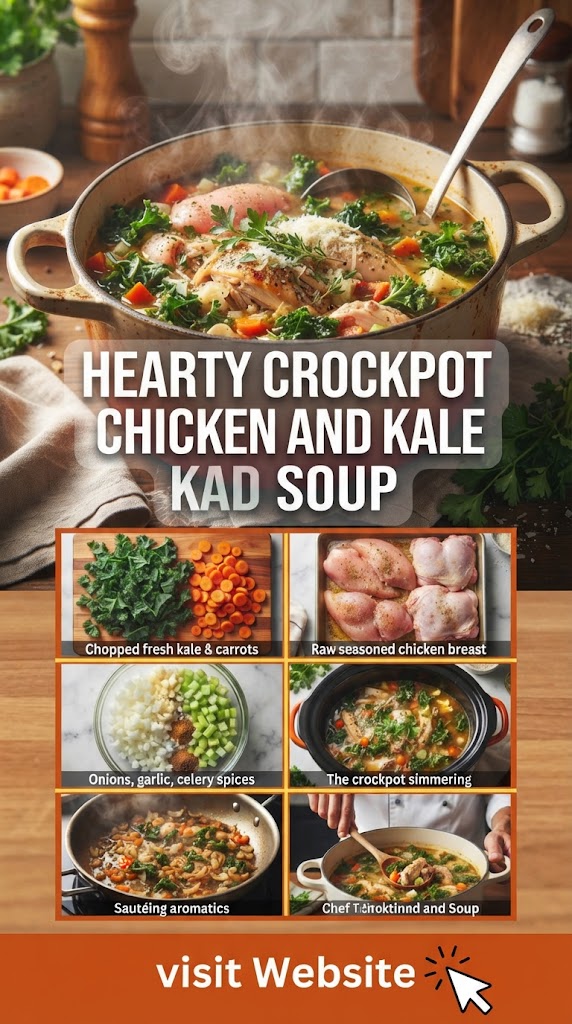
Start by cleaning and dicing your carrots, celery, and onion. Aim for uniform pieces so they cook evenly. Mince the garlic and set it aside for a few minutes before adding it to the pot; this allows the beneficial enzymes to activate.
Step 2: Layer the Crockpot
Place the chicken at the bottom of the slow cooker. Layer the onions, garlic, carrots, and celery over the chicken. If you are using potatoes or beans, add them now. Sprinkle the dried herbs (oregano, thyme, red pepper flakes), salt, and pepper over the top.
Step 3: Add the Liquid
Pour the chicken broth over the ingredients until everything is submerged. Do not add the kale yet! Adding kale too early will result in a gray, mushy texture.
Step 4: Slow Cook
Cover the Crockpot with its lid.
- Low Heat: 6 to 7 hours (Recommended for the best texture).
- High Heat: 3 to 4 hours.
Step 5: Shred the Chicken
Once the cook time is complete, carefully remove the chicken from the pot and place it on a cutting board. Using two forks, shred the chicken into bite-sized pieces. Return the shredded chicken to the pot.
Step 6: The Kale and Finishing Touches
Add the chopped kale and the lemon juice to the pot. Stir well. The residual heat of the soup will wilt the kale in about 5 to 10 minutes. This ensures the kale remains vibrant green and retains its structural integrity.
Step 7: Taste and Season
Sample the broth. Adjust the salt and pepper if necessary. The lemon juice is crucial here—it cuts through the richness and brightens all the other flavors.
Pro-Tips for the Best Texture and Flavor
To move from a “good” soup to a “restaurant-quality” soup, consider these expert tips:
1. Sear the Chicken First
If you have an extra ten minutes, sear the chicken in a pan with a little olive oil before putting it in the Crockpot. This creates a “Maillard reaction”—the browning of the meat—which adds a deep, savory complexity to the final broth.
2. Don’t Overcook the Kale
As mentioned in the instructions, timing is everything. If you like your kale to have a bit of a “bite,” add it just 5 minutes before serving. If you prefer it very soft, add it 20 minutes before. Never leave kale in a slow cooker for the full 6 hours.
3. Use Fresh Herbs if Possible
While dried herbs are convenient and work well in slow cookers, finishing the dish with a handful of fresh parsley or dill can take the aroma to the next level.
4. Manage the Salt
Slow cookers tend to concentrate flavors. If you use a broth that is high in sodium, your soup may end up too salty by the end of the day. Always start with low-sodium broth and season at the very end.
Variations to Suit Every Palate
One of the reasons this soup is so popular in the USA is its adaptability to various dietary trends and regional tastes.
The Zesty Mediterranean Version
Add a jar of drained artichoke hearts, some sun-dried tomatoes, and a sprinkle of Feta cheese upon serving. Use Lacinato kale (also known as Dino kale) for a more traditional Italian feel.
The Creamy (But Healthy) Version
If you crave a creamy texture but want to avoid heavy dairy, stir in half a cup of full-fat coconut milk or a dollop of Greek yogurt just before serving. This creates a velvety mouthfeel without the heaviness of heavy cream.
The Spicy Kick
For those who enjoy heat, add diced jalapeños with the aromatics and finish the soup with a dash of hot sauce or a generous amount of crushed red pepper.
The Keto/Low-Carb Adaptation
The base recipe is already very low in carbs. To keep it strictly Keto, avoid adding potatoes or beans. Instead, add extra fats like avocado slices on top or a drizzle of extra-virgin olive oil.
The Role of Kale: Why It’s More Than Just a Trend
Kale’s rise to fame in the early 2010s wasn’t just marketing—it was based on the vegetable’s incredible nutrient density. In a soup, kale acts as a “buffer.” It absorbs the fats and salts of the broth, making it much more palatable for those who find raw kale too bitter or tough.
Choosing the Right Kale
- Curly Kale: This is the most common variety. It has ruffled leaves and a pungent, peppery flavor. It holds up well in soups.
- Lacinato (Dino) Kale: These leaves are darker, flatter, and more delicate. They have a slightly sweeter, more earthy taste.
- Red Russian Kale: Known for its reddish-purple stems, this variety is very sweet and tender, making it perfect if you want a milder soup.
How to Prepare Kale
Always remove the woody stems. The stems are very fibrous and do not soften well in the Crockpot. The easiest way to do this is to hold the stem with one hand and run your other hand along the stem to “strip” the leaves off.
Side Dish Pairings: What to Eat With Your Soup
While this soup is a complete meal on its own, the right side dish can enhance the dining experience.
- Crusty Sourdough Bread: Perfect for dipping into the broth and soaking up every last drop.
- Parmesan Crisps: For a low-carb crunch that adds a salty, cheesy element.
- A Simple Green Salad: A side of arugula with a light lemon vinaigrette provides a fresh contrast to the warm soup.
- Roasted Garlic Bread: The sweetness of roasted garlic complements the savory chicken perfectly.
Meal Prep, Storage, and Freezing Guide
In the modern American household, meal prepping is a survival skill. Crockpot Chicken and Kale Soup is a “meal prep champion” because it actually tastes better the next day.
Refrigeration
Store the soup in airtight containers in the refrigerator for up to 4 days. As it sits, the flavors will continue to marry, often resulting in a deeper taste on day two or three.
Freezing
This soup freezes exceptionally well.
- Cooling: Allow the soup to cool completely to room temperature before freezing.
- Portioning: Freeze in individual serving containers or large freezer bags.
- Expansion: If using jars, leave at least an inch of “headspace” because the liquid will expand as it freezes.
- Duration: It will stay fresh in the freezer for up to 3 months.
Reheating
- Stovetop: Reheat over medium heat until simmering.
- Microwave: Heat in 1-minute intervals, stirring in between.
- Note: If the kale has become too soft after freezing, you can always stir in a handful of fresh kale during the reheating process to restore some texture.
The Economics of Chicken and Kale Soup
In an era of rising grocery prices, this recipe is remarkably budget-friendly.
- Bulk Buying: Chicken thighs and large bags of kale are often available at wholesale prices.
- Pantry Staples: Carrots, onions, and celery are among the most affordable vegetables per pound.
- Reducing Waste: This soup is a “kitchen sink” meal. Have a half-used bag of spinach? Throw it in. A few shriveled mushrooms? They’ll taste great in the broth.
By making a large batch in the Crockpot, you are effectively lowering your “cost per meal,” providing high-quality nutrition for just a few dollars per serving.
Frequently Asked Questions
Can I use frozen chicken?
Technically, yes, but it is not recommended for slow cookers. Putting frozen meat in a Crockpot can keep the food in the “danger zone” (40°F – 140°F) for too long, potentially allowing bacteria to grow. It is always safest to thaw your chicken in the refrigerator overnight before cooking.
My soup is too thin. How can I thicken it?
If you prefer a thicker consistency:
- The Potato Method: Mash some of the cooked potatoes against the side of the pot.
- The Cornstarch Slurry: Mix 1 tablespoon of cornstarch with 2 tablespoons of cold water and stir it into the boiling soup.
- The Bean Mash: If you added cannellini beans, blend a cup of the soup (including beans) and pour it back in.
Is this soup kid-friendly?
Many children are wary of “green things” in their soup. To make it more kid-friendly, chop the kale into very small, confetti-like pieces so it integrates more into the broth. The tenderness of the shredded chicken usually makes it a hit with younger eaters.
What is the difference between a Crockpot and a Slow Cooker?
“Crockpot” is a brand name, while “slow cooker” is the general term for the appliance. However, Crockpots specifically feature a stoneware pot surrounded by a heating element, whereas some other slow cookers have a metal pot that sits on a heating base. For this recipe, either will work perfectly.
Can I make this in an Instant Pot?
Yes! If you are short on time, use the “Sauté” function for the aromatics, then add the chicken and broth. Cook on “Manual/High Pressure” for 10-12 minutes. Quick release the pressure, shred the chicken, and stir in the kale at the end.
The Sensory Experience: Why We Love It
Think about a cold, rainy Tuesday. You’ve had a long day at work, the commute was frustrating, and your energy is low. You walk through your front door and are immediately greeted by the smell of home. The garlic and thyme have permeated the air, creating a sense of safety and warmth.
You ladle the soup into a heavy ceramic bowl. You see the vibrant green of the kale, the bright orange of the carrots, and the rustic, shredded texture of the chicken. The first steam hits your face, clearing your senses. The first sip is salty, savory, and has a hint of brightness from the lemon. This isn’t just “eating”—this is a moment of self-care.
Health Benefits Beyond the Basics
We’ve discussed vitamins and minerals, but the benefits of Chicken and Kale Soup extend to lifestyle and systemic health.
Weight Management
Because this soup is high in fiber and protein but low in calorie density, it is an excellent tool for weight management. It allows you to eat a large volume of food (which triggers satiety signals in the brain) without consuming excessive calories.
Hydration
Many people struggle to stay hydrated, especially in the winter. A broth-based soup provides a significant amount of water, along with electrolytes like sodium and potassium, helping to maintain fluid balance.
Gut Health
If you use bone broth, the amino acids like glutamine help to “seal” the gut lining. This is particularly beneficial for those with sensitive digestive systems or inflammatory conditions.
Conclusion: Making it a Tradition
The Crockpot Chicken and Kale Soup is more than a recipe; it’s a testament to the idea that healthy food doesn’t have to be complicated or bland. It’s a dish that respects your time, honors your health, and satisfies your cravings for comfort.
By mastering this soup, you’re adding a versatile tool to your culinary arsenal. Whether you’re cooking for a family of four, meal prepping for a busy week, or bringing a pot to a sick friend, this soup represents the best of home cooking. It’s humble, it’s honest, and it’s undeniably delicious.
So, the next time you see a bunch of kale at the grocery store, don’t just walk by. Grab it, thaw some chicken, and let your Crockpot do the heavy lifting. Your body—and your taste buds—will thank you.
Summary Checklist for Success
- Chicken: Use thighs for moisture or breasts for lean protein.
- Kale: Add in the last 10 minutes to keep it green.
- Lemon: Don’t skip it; the acidity balances the earthiness.
- Timing: Low and slow (6-7 hours) yields the best chicken texture.
- Aromatics: Sautéing onions and garlic beforehand adds an extra layer of flavor.
- Storage: Makes for excellent leftovers; freezes perfectly for 3 months.
By following this guide, you are guaranteed a bowl of soup that is not only Google-rank worthy but, more importantly, kitchen-table worthy. Enjoy the process of slow cooking and the bounty of health it brings to your home.