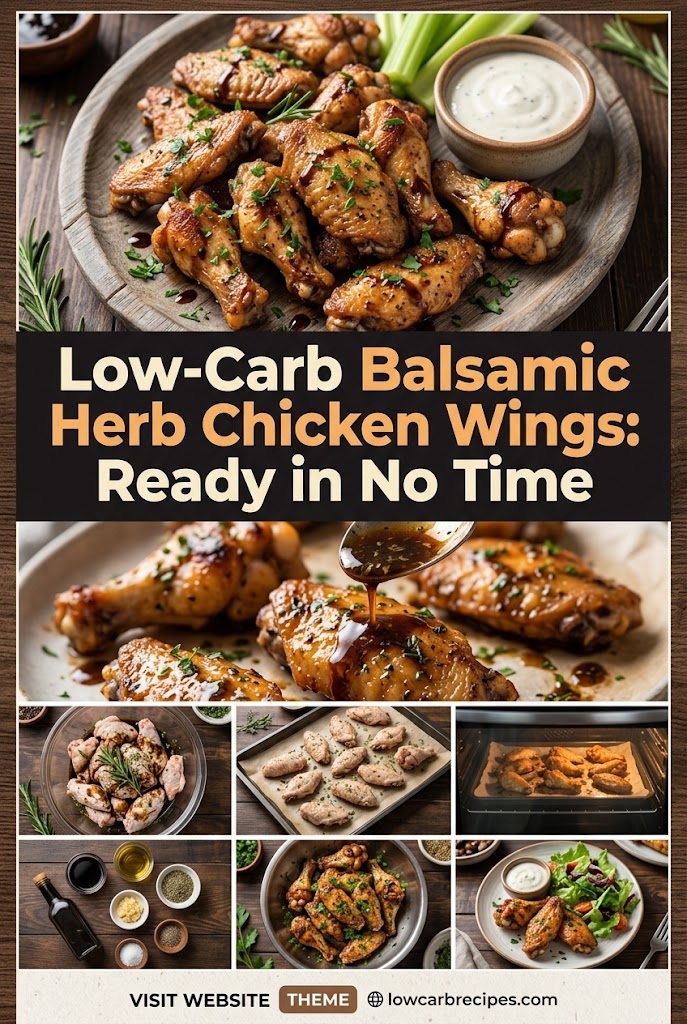
Low-Carb Balsamic Herb Chicken Wings: Ready in No Time
In the world of appetizers and game-day snacks, few items hold as much universal appeal as the chicken wing. However, for those committed to a low-carb, ketogenic, or health-conscious lifestyle, the standard wing—often breaded, deep-fried in inflammatory seed oils, and tossed in sugary sauces—can be a dietary minefield. Enter the Low-Carb Balsamic Herb Chicken Wing.
This recipe isn’t just a compromise; it is an upgrade. By combining the acidic brightness of balsamic vinegar with the earthy, aromatic profile of fresh herbs, we create a flavor profile that is sophisticated, bold, and incredibly satisfying. Best of all, these wings achieve a “fried-like” crunch without the need for a deep fryer or heavy carbohydrates. Whether you are hosting a party, preparing a quick weeknight dinner, or simply craving something savory, this guide will walk you through every nuance of creating the perfect balsamic herb wing.
The Science of the Perfect Low-Carb Wing
Before we dive into the ingredients, it is essential to understand what makes a chicken wing truly exceptional. A perfect wing requires a trifecta of textures and flavors: a shatteringly crisp skin, succulent and juicy meat, and a sauce that coats the palate without overwhelming the natural flavor of the chicken.
Achieving Crispiness Without Flour
The biggest challenge in low-carb cooking is mimicking the crunch of breading. When you deep-fry a wing at a restaurant, the flour or cornstarch creates a barrier that crisps up. To achieve this at home without the carbs, we utilize two secret weapons: Air circulation and pH manipulation.
Using an air fryer or a wire rack in a convection oven allows hot air to circulate 360 degrees around the wing. This renders the fat out of the skin more efficiently. Additionally, a light dusting of aluminum-free baking powder (not baking soda) raises the pH level of the skin, breaking down the peptide bonds and allowing the skin to brown and crisp much faster.
The Magic of Balsamic Vinegar
Balsamic vinegar is often misunderstood in the low-carb community. While some aged balsamic glazes are loaded with added sugars, a high-quality, authentic balsamic vinegar provides deep complexity with a manageable amount of natural sugar. When reduced or paired with savory herbs, it creates a “sticky” glaze effect that mimics high-sugar BBQ sauces without the insulin spike.
Ingredients: A Deep Dive into Flavor
To make these wings truly stand out, quality ingredients are paramount. Here is what you will need and why each component matters.
1. The Chicken Wings
Always look for “split” wings (flats and drumettes). If you buy whole wings, you will need to butcher them yourself. Aim for organic or pasture-raised chicken if your budget allows. These birds tend to have a better fat-to-meat ratio, which leads to better rendering and flavor.
2. The Fat Source: Extra Virgin Olive Oil or Avocado Oil
For the marinade, we use a high-heat stable oil. Avocado oil is excellent for high-temperature roasting (up to 500°F), while a high-quality extra virgin olive oil adds a peppery note that complements the balsamic.
3. The Acid: Balsamic Vinegar of Modena
Ensure you are using a liquid balsamic vinegar rather than a pre-made “glaze,” which usually contains cornstarch and sugar. The acidity in the vinegar acts as a tenderizer for the meat while providing that signature tang.
4. The Herb Profile
- Rosemary: Its piney, woody aroma is the backbone of this dish.
- Thyme: Adds a subtle earthy sweetness.
- Oregano: Provides a Mediterranean flair that cuts through the richness of the chicken fat.
- Garlic: Fresh minced garlic is non-negotiable. It caramelizes in the oven, creating small bits of flavor gold.
5. The Seasoning
- Kosher Salt: The large grains help draw moisture out of the skin.
- Black Pepper: Freshly cracked provides a heat that builds slowly.
- Baking Powder: As mentioned, this is the secret to the crunch.
Step-by-Step Instructions: Three Ways to Cook
Whether you prefer the set-it-and-forget-it nature of the oven or the rapid speed of an air fryer, we have you covered.
Method 1: The Ultimate Oven-Baked Method (Best for Large Batches)
The oven is ideal if you are feeding a crowd. The key is using a parchment-lined baking sheet topped with a wire cooling rack.
- Prep and Dry: Pat the wings extremely dry with paper towels. Any moisture on the skin will lead to steaming rather than crisping.
- The Coating: In a large bowl, toss the dry wings with 1 tablespoon of baking powder and a teaspoon of salt. Do not add the oil or balsamic yet.
- The First Bake: Place the wings on the wire rack. Bake at 425°F (220°C) for 20 minutes.
- The Flip: Flip the wings and bake for another 15–20 minutes until they look golden and feel firm.
- The Glaze: While the wings bake, whisk together the balsamic vinegar, olive oil, minced garlic, and chopped herbs.
- The Finish: Remove the wings, toss them in the balsamic herb mixture, and return them to the oven for a final 5 minutes. This allows the sauce to “set” and caramelize onto the skin.
Method 2: The Air Fryer Method (Fastest and Crispiest)
If you are cooking for 1–2 people, the air fryer is superior for texture.
- Prep: Dry the wings and toss with baking powder and salt.
- Air Fry: Arrange in a single layer (do not crowd). Cook at 400°F for 15 minutes.
- Shake: Shake the basket and cook for another 10 minutes.
- Toss: In a bowl, toss the crispy wings with the balsamic herb marinade.
- Refry: Put them back in the air fryer for 2–3 minutes at 400°F to glaze them.
Method 3: The Charcoal Grill (Best for Smoky Flavor)
For those who love a charred, smoky finish, the grill is the way to go.
- Indirect Heat: Set up your grill for two-zone cooking.
- Smoke: Place wings on the cool side of the grill. Cover and cook for 25 minutes.
- Sear: Move wings to the direct heat side. Brush with the balsamic herb mixture frequently as you turn them. The sugars in the balsamic will char beautifully—watch closely to prevent burning.
Nutritional Breakdown: Why This Fits Your Diet
Traditional buffalo wings at a restaurant can contain upwards of 1,000 calories and 50g of carbohydrates when you factor in the breading and sugary dipping sauces.
Per Serving (Approx. 6 wings):
- Calories: 350-400
- Net Carbs: 3g
- Protein: 28g
- Fat: 26g
The majority of the carbohydrates in this recipe come from the balsamic vinegar. By avoiding honey or brown sugar (common in balsamic recipes), we keep the glycemic load low, making this a safe choice for diabetics and those in ketosis.
Pro-Tips for Culinary Success
The Importance of Room Temperature Meat
Taking your wings out of the fridge 20 minutes before cooking allows the internal temperature to rise slightly. This ensures that the fat begins to render the moment they hit the heat, preventing the meat from becoming tough before the skin is crisp.
Don’t Overcrowd the Pan
This is the most common mistake home cooks make. If the wings are touching, they will trap steam between them. This results in “rubbery” skin. Give each wing at least half an inch of “breathing room.”
Fresh vs. Dried Herbs
While dried herbs are convenient, fresh herbs are transformative in this recipe. Fresh rosemary and thyme contain essential oils that release a much more potent aroma when exposed to the high heat of the oven. If you must use dried, use only one-third of the amount called for in the fresh measurement.
Serving Suggestions and Pairings
What you serve with your Low-Carb Balsamic Herb Chicken Wings can elevate the entire meal.
Low-Carb Dipping Sauces
- Creamy Gorgonzola: The funkiness of blue cheese is a classic partner for balsamic. Whisk together sour cream, heavy cream, crumbled gorgonzola, and a splash of lemon juice.
- Lemon Garlic Aioli: A simple mayonnaise-based sauce with heavy lemon zest and smashed garlic reinforces the Mediterranean profile.
- Tzatziki: If you want something refreshing, a cucumber-yogurt dip (using full-fat Greek yogurt) provides a cooling contrast to the savory wings.
Side Dishes
- Roasted Broccolini: Tossed in the same balsamic herb oil used for the wings.
- Arugula Salad: The peppery bite of arugula with shaved parmesan and a simple lemon vinaigrette cuts through the fat of the chicken perfectly.
- Cauliflower “Mac” and Cheese: For a comforting, hearty side that remains low-carb.
Troubleshooting Common Issues
“My wings are too salty!”
Baking powder can sometimes have a metallic or salty taste if overused. Ensure you are using aluminum-free baking powder and measure it precisely. If you find the result too salty, increase the amount of balsamic vinegar in the glaze to balance it with acidity.
“The skin isn’t getting crispy.”
This is usually due to moisture. Next time, try the “overnight dry-brine.” Place your wings on a rack in the fridge, uncovered, for 4–12 hours before cooking. The cold air of the refrigerator will dehydrate the skin perfectly.
“The balsamic glaze burned.”
Balsamic contains natural sugars. If your oven runs hot or you leave them in too long during the “glazing” phase, the sugars will carbonize and turn bitter. Keep a close eye on the wings during the last 5 minutes of cooking.
Varieties and Substitutions
Make it Spicy
Add a teaspoon of red pepper flakes or a dash of cayenne pepper to the balsamic marinade. The heat of the pepper against the sweetness of the balsamic is a world-class combination.
The Citrus Twist
Replace half of the balsamic vinegar with fresh lemon juice and add extra lemon zest. This “Lemony Herb” version is incredibly bright and perfect for spring and summer.
Paleo/Whole30 Adjustment
Balsamic vinegar is generally allowed on Paleo and Whole30. To ensure compliance, simply use avocado oil and omit any dairy-based dipping sauces. Ensure your baking powder is cornstarch-free (some brands use potato starch or arrowroot instead).
The Cultural Significance of the Chicken Wing
While we often think of wings as a modern American invention (attributed largely to the Anchor Bar in Buffalo, NY, in 1964), the concept of frying small cuts of poultry and coating them in vinegar-based sauces has roots in many global cuisines.
The use of balsamic vinegar and Mediterranean herbs brings an Old World Italian influence to an American classic. This “fusion” approach allows us to appreciate the wing not just as “junk food,” but as a legitimate culinary canvas. In Italy, Pollo al Rosmarino (Rosemary Chicken) is a staple. By adapting those flavors to the wing format, we create a dish that feels both nostalgic and innovative.
Storage and Reheating Tips
Wings are always best fresh, but if you have leftovers, you can preserve that crunch.
- Fridge: Store in an airtight container for up to 3 days.
- Reheating: Do NOT use the microwave; it will turn the skin rubbery. Instead, place them back in the air fryer at 350°F for 5 minutes or in a toaster oven. This will re-crisp the skin and reactivate the oils in the herbs.
- Freezing: You can freeze cooked wings. To reheat, let them thaw in the fridge overnight and then bake at 400°F until heated through.
Frequently Asked Questions (FAQs)
Can I use frozen wings?
Yes, but you must thaw them completely and dry them thoroughly. Frozen wings often have a “solution” injected into them, which can make them hold more water. Extra drying time is required for frozen wings to get crispy.
Is balsamic vinegar keto-friendly?
In moderation, yes. One tablespoon of balsamic vinegar contains about 2–3 grams of carbs. Since this recipe spreads that across dozens of wings, the impact per serving is negligible.
Why use baking powder instead of flour?
Flour is high in carbohydrates and can become gummy if not fried in deep oil. Baking powder creates tiny bubbles on the surface of the skin, increasing the surface area and allowing it to become thin and crisp, similar to the texture of a Peking duck.
Can I use chicken thighs instead?
Absolutely. If you prefer dark meat, you can use bone-in, skin-on chicken thighs. You will need to increase the cooking time to about 35–45 minutes, but the balsamic herb profile works beautifully with the richer flavor of thighs.
Final Thoughts: The Joy of Healthy Entertaining
Choosing a low-carb lifestyle doesn’t mean you have to sit in a corner eating plain steamed broccoli while everyone else enjoys the party. These Low-Carb Balsamic Herb Chicken Wings are a testament to the fact that healthy food can—and should—be the star of the show.
They are sophisticated enough for a dinner party, easy enough for a Tuesday night, and delicious enough that your high-carb-eating friends won’t even realize they are eating “diet food.” The combination of the tangy balsamic, the aromatic herbs, and that signature crunch makes this recipe a permanent addition to any home cook’s repertoire.
By mastering the techniques of moisture control and pH balance, you unlock a world of crispy poultry possibilities. So, fire up your oven or air fryer, grab a bottle of your best balsamic, and prepare to enjoy the best wings of your life—guilt-free.
Summary Recipe Card (For Quick Reference)
- Prep time: 10 minutes
- Cook time: 40 minutes
- Total time: 50 minutes
- Yields: 2 lbs of wings
Ingredients Checklist:
- 2 lbs Chicken Wings (split)
- 1 tbsp Aluminum-free Baking Powder
- 1 tsp Kosher Salt
- 1/2 tsp Black Pepper
- 2 tbsp Balsamic Vinegar
- 2 tbsp Extra Virgin Olive Oil
- 3 cloves Garlic (minced)
- 1 tbsp Fresh Rosemary (finely chopped)
- 1 tbsp Fresh Thyme (finely chopped)
Quick Directions:
- Dry wings; toss with baking powder, salt, and pepper.
- Bake on a wire rack at 425°F for 35-40 mins, flipping halfway.
- Whisk vinegar, oil, garlic, and herbs.
- Toss cooked wings in the sauce and bake for 5 more minutes to glaze.
- Serve hot with your favorite low-carb dip.
This comprehensive guide ensures that whether you are a novice cook or a seasoned chef, your journey to the perfect low-carb wing is a resounding success. Enjoy the process, experiment with the herb ratios, and most importantly, enjoy every crispy, savory bite.