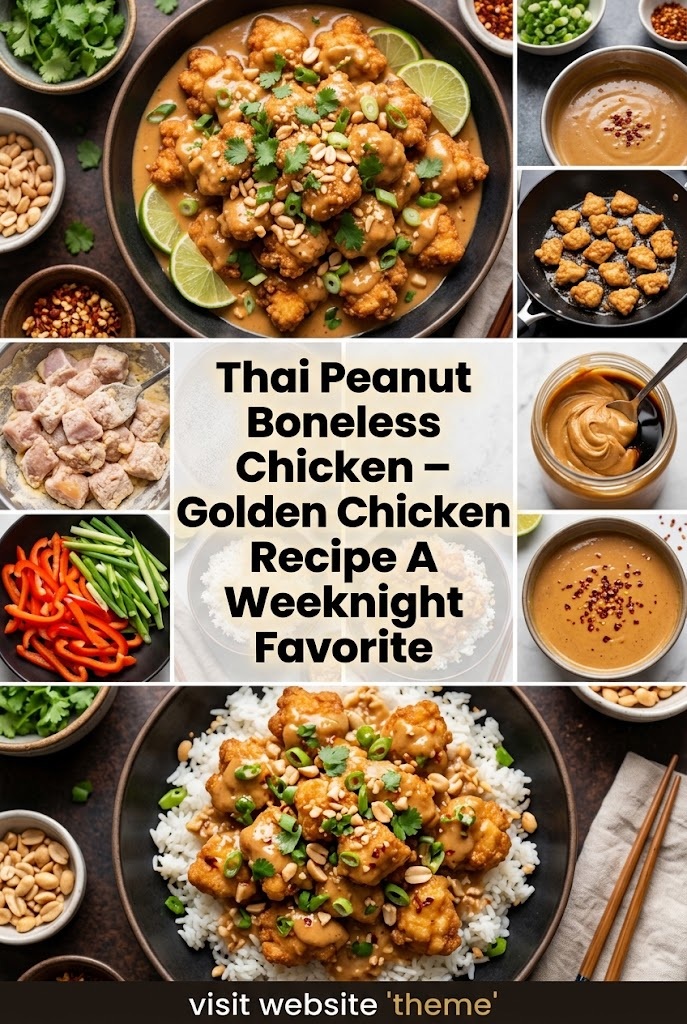
Thai Peanut Boneless Chicken – Golden Chicken Recipe A Weeknight Favorite
The quest for the perfect weeknight dinner often feels like a balancing act between time, health, and flavor. We want something that feels gourmet but doesn’t require five hours in the kitchen or a culinary degree to execute. Enter the Thai Peanut Boneless Chicken, often referred to as “Golden Chicken” due to its stunning amber hue and perfectly seared exterior. This dish is a powerhouse of flavor, combining the creamy, nutty richness of Southeast Asian peanut sauce with the lean, protein-packed versatility of boneless chicken.
In this comprehensive guide, we will explore why this recipe has become a staple in American households, the science behind the perfect golden sear, and how you can master the balance of sweet, salty, spicy, and sour that defines Thai cuisine. Whether you are a meal prep enthusiast or a busy parent looking to impress a picky crowd, this recipe is your new secret weapon.
Why Thai Peanut Chicken is a Global Sensation
Thai cuisine is world-renowned for its “balancing act.” Unlike many Western dishes that focus on one primary flavor profile, Thai cooking seeks to harmonize five distinct tastes: sweet, sour, salty, spicy, and sometimes bitter. The Thai Peanut Boneless Chicken recipe embodies this philosophy perfectly.
The “Golden Chicken” moniker comes from the specific cooking technique where chicken breast or thigh pieces are seared at high heat until the proteins undergo the Maillard reaction. This creates a savory, browned crust that holds up against the thick, luscious peanut sauce. When you bite into it, you get a crunch of the sear followed by the melt-in-your-mouth tenderness of the chicken, all coated in a sauce that hits every taste bud.
The Essential Ingredient Breakdown
To achieve restaurant-quality results at home, you need to understand your ingredients. While this recipe is forgiving, using high-quality components will elevate the final dish significantly.
1. The Chicken: Breast vs. Thighs
For this recipe, boneless is the way to go.
- Chicken Breasts: These are the leanest option. When sliced thin or into bite-sized cubes, they cook incredibly fast. The key is not to overcook them, as the peanut sauce relies on the chicken staying juicy.
- Chicken Thighs: Many chefs prefer boneless, skinless thighs because they contain more fat, which translates to more flavor and a more “forgiving” texture if left on the heat a minute too long.
2. The Peanut Butter: Natural vs. Processed
- Creamy Peanut Butter: Provides a smooth, velvet-like consistency to the sauce.
- Chunky Peanut Butter: Adds an extra layer of texture that mimics the crushed peanuts often used as a garnish in traditional Thai Satay.
- Pro Tip: If using “natural” peanut butter (the kind you have to stir), ensure it is well-incorporated so the oil doesn’t separate in your sauce.
3. Aromatics: The Holy Trinity of Thai Cooking
You cannot have an authentic-tasting Thai peanut sauce without garlic, ginger, and shallots (or red onion). Fresh ginger provides a zingy heat that cuts through the heaviness of the peanuts, while garlic adds a savory depth.
4. The Liquid Gold: Coconut Milk
Full-fat canned coconut milk is essential. It provides the creamy base that allows the peanut butter to transform into a pourable sauce. Avoid “coconut drink” found in cartons, as it is too watery.
5. Brighteners: Lime and Fish Sauce
To keep the dish from feeling too “heavy,” you need acidity and umami. Freshly squeezed lime juice provides the brightness, while a splash of fish sauce (or soy sauce for a vegan-friendly alternative) provides that deep, salty complexity.
Step-by-Step Guide to the Perfect Golden Chicken
Success in the kitchen is often about the order of operations. Follow these steps to ensure your chicken is golden and your sauce is silk.
Step 1: Prepping the Protein
Start by patting your boneless chicken dry with paper towels. Moisture is the enemy of a golden sear. Cut the chicken into 1-inch pieces. Season them lightly with salt and white pepper.
Step 2: The Searing Phase
Heat a large skillet or wok over medium-high heat with a high-smoke-point oil (like avocado or peanut oil). Add the chicken in a single layer. Do not crowd the pan. If you add too much chicken at once, the temperature of the pan will drop, and the chicken will steam in its own juices rather than searing. Cook until a golden-brown crust forms, then flip. Remove the chicken when it is about 90% cooked through. It will finish cooking in the sauce later.
Step 3: Building the Flavor Base
In the same pan (don’t wash it! those brown bits are flavor), add your minced garlic, grated ginger, and a tablespoon of red curry paste. Sauté for about 60 seconds until the aroma fills the room. This “blooms” the spices in the curry paste, releasing their essential oils.
Step 4: The Sauce Emulsification
Whisk in your coconut milk and peanut butter. Use a whisk to ensure there are no clumps of peanut butter left. Bring the mixture to a gentle simmer. You will notice the sauce beginning to thicken and turn a beautiful orange-gold color.
Step 5: The Final Integration
Add the golden chicken back into the pan. Let it simmer in the sauce for 3-5 minutes. This allows the chicken to absorb the flavors of the peanut sauce while finishing the cooking process. Finish with a squeeze of fresh lime and a handful of chopped cilantro.
Nutritional Benefits of Thai Peanut Chicken
One of the reasons this dish ranks so high for weeknight dinners is its nutritional profile.
- High Protein: Chicken is an excellent source of lean protein, essential for muscle repair and satiety.
- Healthy Fats: While peanut butter and coconut milk are calorie-dense, they provide monounsaturated and medium-chain triglycerides (MCTs) which are beneficial for heart health and energy levels when consumed in moderation.
- Metabolism Boost: The capsaicin in red curry paste and the thermogenic properties of ginger can provide a slight boost to your metabolic rate.
- Micronutrients: Ingredients like garlic and lime are packed with antioxidants and Vitamin C.
Customizing Your Golden Chicken: Variations and Substitutions
The beauty of this Thai Peanut Boneless Chicken is its adaptability. Here is how you can tweak it to fit your dietary needs:
Make it Low Carb / Keto
The primary source of carbs in this dish is usually the side of rice. To make it Keto-friendly:
- Swap the rice for cauliflower rice or spiralized zucchini (zoodles).
- Ensure your peanut butter has no added sugar.
- Use liquid stevia or monk fruit instead of brown sugar or honey if the recipe calls for a sweetener.
Make it Vegan
You can achieve the same “Golden” effect with plant-based proteins:
- Tofu: Use extra-firm tofu, press the water out, and coat in a little cornstarch before searing to get that golden crust.
- Tempeh: The nutty flavor of tempeh pairs exceptionally well with peanut sauce.
- Chickpeas: For a pantry-staple version, use canned chickpeas.
Dialing the Heat
- Mild: Use only half a tablespoon of red curry paste and remove any seeds from fresh chilies.
- Hot: Add sliced Thai bird’s eye chilies or a teaspoon of sambal oelek (chili garlic paste) to the sauce.
Expert Tips for the Ultimate Flavor Profile
If you want your Thai Peanut Chicken to go from “good” to “unforgettable,” pay attention to these professional details:
1. The Power of Toasted Peanuts
While there is peanut butter in the sauce, topping the finished dish with crushed, toasted peanuts adds a much-needed textural contrast. The crunch breaks up the creaminess and reinforces the flavor.
2. Don’t Skimp on the Cilantro
Cilantro is polarizing, but in Thai cooking, it provides a necessary herbal “lift.” If you are one of those people for whom cilantro tastes like soap, substitute with Thai basil or thinly sliced scallions.
3. Balance Your Sauce
Before serving, taste your sauce.
- Too salty? Add a teaspoon of honey or brown sugar.
- Too sweet? Add a splash more lime juice or fish sauce.
- Too thick? Thin it out with a splash of chicken broth or water.
4. Use a Cast Iron Skillet
For the absolute best “Golden Chicken” crust, use a cast-iron skillet. It retains heat better than stainless steel or non-stick, ensuring a consistent sear across all pieces of chicken.
Pairing Suggestions: What to Serve with Your Thai Peanut Chicken
To turn this into a complete meal, you need the right sides.
Classic Jasmine Rice
The floral aroma of Jasmine rice is the traditional accompaniment. It acts as a sponge for the extra peanut sauce. For a healthier twist, try brown Jasmine rice.
Coconut Lime Rice
Elevate your side dish by cooking your rice in a mix of water and the leftover coconut milk from the recipe, adding a zest of lime at the end.
Cold Noodle Salad
During summer months, serve the Thai Peanut Chicken over cold rice noodles with shredded carrots, cucumbers, and a rice vinegar dressing.
Roasted Broccoli or Bok Choy
The charred flavor of roasted broccoli or the crunch of steamed bok choy provides a great counterpoint to the rich sauce.
Meal Prep and Storage: The Gift That Keeps on Giving
Thai Peanut Chicken is one of those rare dishes that actually tastes better the next day. As it sits, the chicken continues to absorb the spices from the sauce.
- Fridge: Store in an airtight container for up to 4 days.
- Freezer: You can freeze this dish for up to 3 months. However, note that coconut milk can sometimes “split” or look grainy when thawed. To fix this, reheat slowly on the stove and whisk in a teaspoon of water or coconut milk to re-emulsify.
- Reheating: Avoid the microwave if possible, as it can make the chicken rubbery. Reheat in a small pan over low heat, adding a splash of liquid if the sauce has thickened too much in the fridge.
Common Mistakes to Avoid
Even the simplest recipes have pitfalls. Avoid these common errors to ensure your Golden Chicken is a success:
- Using Cold Chicken: Taking the chicken straight from the fridge to the hot pan causes the muscle fibers to seize up, resulting in tough meat. Let the chicken sit at room temperature for 15 minutes before cooking.
- Using Dried Herbs: Dried ginger or garlic powder will not provide the same aromatic punch as fresh. In Thai cooking, fresh is non-negotiable for that authentic taste.
- Burning the Curry Paste: Red curry paste contains many spices that can burn quickly. Keep it moving in the pan and add the liquids as soon as it becomes fragrant.
- Low-Fat Coconut Milk: “Lite” coconut milk is mostly water. It will result in a thin, runny sauce that won’t cling to the chicken. Always go for the full-fat version for that iconic “Golden Chicken” texture.
The Cultural Context: Why We Love Thai Fusion
The popularity of Thai Peanut Chicken in the USA is a testament to the “Thai Select” program and the global spread of Thai flavors. While “Peanut Chicken” as we know it is often a Westernized version of Gai Pad Met Mamuang (Chicken with Cashews) or a variation of Indonesian Satay, it has carved out its own identity as a comfort food staple.
The dish bridges the gap between the familiar (chicken and peanut butter) and the exotic (lemongrass, galangal, and fish sauce). It serves as an introductory dish for many who are just beginning to explore the vast world of Southeast Asian flavors.
Frequently Asked Questions (FAQs)
Can I use peanut flour instead of peanut butter?
You can, but you will lose the creamy fats that make the sauce luxurious. If using peanut flour, you will need to add more coconut milk or a bit of oil to compensate for the missing texture.
Is Thai Peanut Chicken spicy?
It depends on the curry paste. Most commercial red curry pastes have a moderate heat level. If you are sensitive to spice, look for “Yellow Curry Paste,” which is generally milder and sweeter.
Can I make this in a slow cooker?
Yes. You can place the chicken and all sauce ingredients in a slow cooker for 3-4 hours on low. However, you will lose the “Golden” seared crust on the chicken. To fix this, you could sear the chicken in a pan before placing it in the slow cooker.
What is the best oil for searing the chicken?
Use an oil with a high smoke point like peanut oil, canola oil, or grapeseed oil. Avoid extra virgin olive oil or butter, as they will burn at the temperatures required to get a golden sear.
Mastering the “Golden” Finish: A Deep Dive into the Maillard Reaction
To truly understand why “Golden Chicken” is so addictive, we have to look at the chemistry. The Maillard reaction is a chemical reaction between amino acids and reducing sugars that gives browned food its distinctive flavor.
When you sear your boneless chicken at high heat, you aren’t just changing the color; you are creating hundreds of different flavor compounds. These compounds are what give the dish its “savory” or “umami” kick. This is why we emphasize drying the chicken and not crowding the pan. If the chicken is wet, the energy of the pan goes into evaporating the water (steaming) rather than browning the meat. By mastering this one technique, you elevate the dish from a simple stew to a gourmet experience.
Final Thoughts: A Recipe for Every Occasion
The Thai Peanut Boneless Chicken (Golden Chicken) is more than just a recipe; it’s a versatile framework. Once you master the base sauce and the searing technique, you can apply these skills to seafood, beef, or even hearty vegetables like roasted cauliflower and sweet potatoes.
In a world where we are often rushed, taking twenty minutes to craft a meal that is healthy, vibrant, and incredibly flavorful is a form of self-care. This dish brings the heat of Bangkok and the comfort of a home-cooked meal right to your dinner table.
Whether you’re serving it to guests with a garnish of crushed peanuts and lime wedges or eating it out of a tupperware container for lunch, the Golden Chicken remains a undisputed champion of the weeknight dinner.
Detailed Recipe Card (Summary)
Prep time: 15 minutes
Cook time: 15 minutes
Servings: 4
Ingredients:
- 1.5 lbs Boneless Skinless Chicken Breasts or Thighs (cut into bite-sized pieces)
- 1 tbsp Peanut Oil
- 1 can (13.5 oz) Full-fat Coconut Milk
- 1/2 cup Creamy Peanut Butter
- 2 tbsp Red Curry Paste
- 1 tbsp Fresh Ginger (grated)
- 3 cloves Garlic (minced)
- 1 tbsp Fish Sauce (or Soy Sauce)
- 1 tbsp Brown Sugar (optional)
- Juice of 1 Lime
- Fresh Cilantro and Crushed Peanuts for garnish
Instructions:
- Sear the Chicken: In a large skillet over medium-high heat, cook the chicken in oil until golden brown on all sides. Remove and set aside.
- Aromatics: In the same pan, sauté garlic, ginger, and curry paste for 1 minute.
- The Sauce: Whisk in coconut milk, peanut butter, fish sauce, and brown sugar. Simmer until smooth.
- Combine: Return chicken to the pan and simmer for 3-5 minutes.
- Finish: Stir in lime juice. Garnish with cilantro and peanuts before serving over Jasmine rice.
By following this guide, you are guaranteed a meal that hits every high note of flavor and texture. Enjoy your journey into the delicious world of Thai-inspired home cooking!