
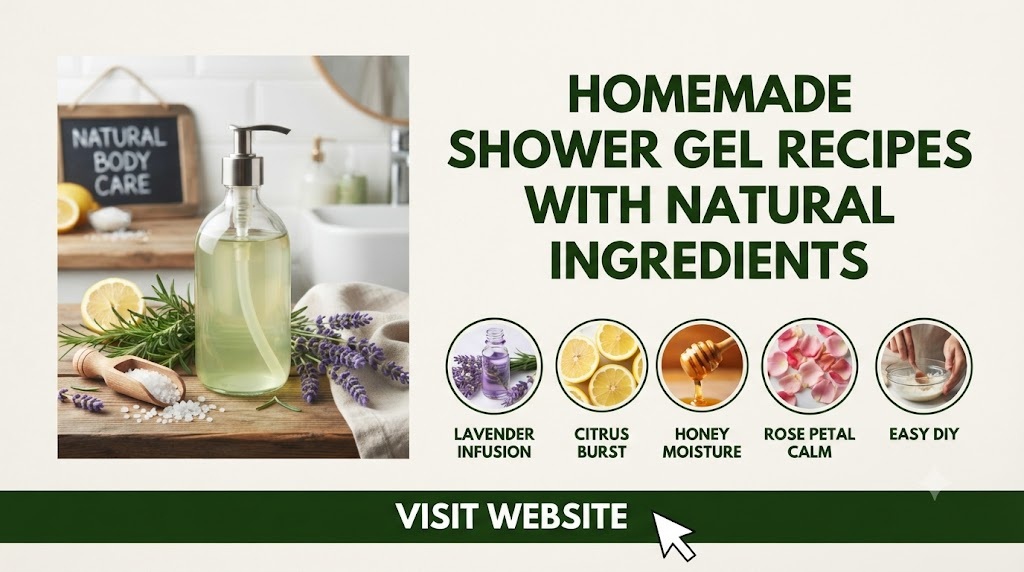
Homemade Shower Gel Recipes with Natural Ingredients
The Ultimate Encyclopedia of Natural Homemade Shower Gels: A Comprehensive Guide to Botanical Body Care
In an era where we are increasingly conscious of what we put into our bodies, it is only natural that we turn our attention to what we put on them. The skin is the body’s largest organ, a semi-permeable membrane that breathes, absorbs, and protects. Yet, the average commercial shower gel is a cocktail of synthetic detergents, artificial fragrances, and chemical preservatives that can strip the skin of its natural oils and disrupt its delicate microbiome.
The transition to homemade shower gels isn’t just a DIY trend; it is a return to botanical wisdom. By crafting your own body wash, you gain total control over the ingredients, ensuring that every drop provides nourishment, hydration, and therapeutic benefits. This guide serves as your masterclass in natural formulation, covering everything from the chemistry of surfactants to the art of aromatherapy, alongside a vast library of recipes tailored for every skin type and mood.
Part I: The Science of the Skin and the Problem with Commercial Gels
To understand why natural shower gel is superior, we must first understand the biology of the skin. Our skin is covered by a thin, slightly acidic film known as the acid mantle. This layer, composed of sebum (natural oils) and sweat, maintains a pH of approximately 5.5. It acts as a barrier against bacteria, viruses, and environmental pollutants.
The pH Conflict
Most commercial “soap” bars and liquid body washes are highly alkaline, often reaching a pH of 9 or 10. When you wash with these products, you neutralize the acid mantle, leaving your skin vulnerable and dehydrated. It can take hours for the skin to return to its natural pH, during which time moisture evaporates (Transepidermal Water Loss) and irritation can occur.
The “Suds” Trap: SLS and SLES
Sodium Lauryl Sulfate (SLS) and Sodium Laureth Sulfate (SLES) are the primary surfactants used in commercial gels to create that thick, satisfying foam. However, these chemicals are aggressive degreasers originally designed for industrial use. They are known skin irritants that can lead to eczema flares, dryness, and long-term sensitivity.
Synthetic Fragrances and Phthalates
The term “fragrance” or “parfum” on a label can represent hundreds of undisclosed chemicals. Many of these are phthalates, which are linked to endocrine disruption. Natural shower gels, conversely, utilize essential oils that offer not just scent, but physiological and psychological benefits.
Part II: The Natural Formulator’s Toolkit
Before we dive into recipes, you need to assemble your laboratory. You don’t need professional equipment, but a few key items will ensure your gels are consistent and safe.
Essential Equipment
- Digital Scale: Precision is key. Measuring by weight (grams) is far more accurate than measuring by volume (cups/spoons).
- Glass Beakers or Heat-Safe Bowls: For mixing and melting ingredients.
- Immersion Blender: Essential for creating stable emulsions and ensuring thickeners are fully incorporated.
- pH Strips or Digital pH Meter: To ensure your final product is skin-safe (aiming for 5.0 to 6.0).
- Sterilized Bottles: Glass or high-quality BPA-free plastic with pump or flip-top lids.
- Funnel: To minimize mess during bottling.
The “Golden Rule” of Hygiene
Since many homemade shower gels contain water or water-based ingredients (like aloe juice), they are breeding grounds for bacteria and mold. Always sterilize your equipment with 70% isopropyl alcohol before starting.
Part III: The Anatomy of a Natural Shower Gel
Every high-quality homemade shower gel consists of four main components. Understanding these allows you to eventually move away from recipes and start formulating your own unique blends.
1. The Surfactant (The Cleanser)
In natural DIY, our primary surfactant is usually Liquid Castile Soap. Made traditionally from olive oil (though often containing coconut or hemp oils today), it is biodegradable, non-toxic, and effective.
- Alternative: For those who want more foam, Coco Glucoside or Decyl Glucoside (derived from sugar and coconut) can be used for a gentler, more “professional” feel.
2. The Humectant (The Hydrator)
Humectants draw moisture from the air into the skin.
- Vegetable Glycerin: A thick, clear liquid that is a powerhouse of hydration.
- Raw Honey: Naturally antibacterial and a wonderful humectant.
- Aloe Vera Gel: Soothing, cooling, and deeply hydrating.
3. The Emollient (The Softener)
These are the oils and butters that smooth the skin’s surface and lock in moisture.
- Jojoba Oil: Mimics the skin’s natural sebum.
- Sweet Almond Oil: Rich in Vitamin E; great for all skin types.
- Fractionated Coconut Oil: Stays liquid at room temperature and absorbs quickly.
4. The Thickener
Natural liquid soap is often watery. To get that “gel” consistency, we use:
- Xanthan Gum: A natural polysaccharide. A little goes a long way.
- Guar Gum: Similar to xanthan but provides a slightly different “slip.”
- Salt (Sea Salt): Surprisingly, a small amount of salt can thicken certain castile soap formulations.
Part IV: Essential Oil Safety and Aromatherapy
Aromatherapy is the heart of the homemade shower gel experience. However, essential oils are potent and must be handled with care.
Dilution Ratios
For a rinse-off product like shower gel, a 1% to 2% dilution is generally recommended. This equates to roughly 10-20 drops of essential oil per 100ml of base.
Top, Middle, and Base Notes
To create a scent that lasts and evolves, blend oils from different categories:
- Top Notes (Immediate impact): Lemon, Grapefruit, Peppermint, Eucalyptus.
- Middle Notes (The heart): Lavender, Rosemary, Geranium, Chamomile.
- Base Notes (Long-lasting): Patchouli, Sandalwood, Cedarwood, Vanilla.
Phototoxicity Warning
Citrus oils (Lemon, Lime, Bergamot) can be phototoxic, meaning they can cause the skin to burn more easily in sunlight. Since shower gel is washed off, the risk is lower, but it is still best to use “FCF” (Furocoumarin-free) citrus oils or keep concentrations low.
Part V: Foundational Recipes for Every Skin Type
1. The “Daily Nourish” Castile Base (Best for Beginners)
This is the perfect entry-point recipe. It’s balanced, easy to make, and provides a gentle clean without stripping.
- Ingredients:
- 1 cup Liquid Castile Soap (Unscented)
- 1/4 cup Vegetable Glycerin
- 2 tablespoons Jojoba Oil
- 1 teaspoon Vitamin E Oil (acts as an antioxidant for the oils)
- 15 drops Lavender Essential Oil
- 10 drops Sweet Orange Essential Oil
- Instructions:
- In a glass bowl, combine the glycerin and jojoba oil.
- Add the essential oils and Vitamin E to the glycerin mixture and stir well.
- Slowly pour in the liquid castile soap.
- Stir gently with a spoon (do not whisk, or you will create too many bubbles).
- Pour into your bottle and let it sit for 24 hours to thicken slightly.
2. Deep Hydration Honey and Oat Gel (For Dry/Winter Skin)
Honey is a natural humectant, while oats soothe itchy, dry winter skin.
- Ingredients:
- 1/2 cup Liquid Castile Soap
- 1/2 cup Raw Honey (liquefied)
- 1/4 cup Colloidal Oatmeal (finely ground oats)
- 2 tablespoons Avocado Oil
- 10 drops Cedarwood Essential Oil
- 5 drops Sandalwood Essential Oil
- Instructions:
- Gently warm the honey until it is thin and easy to pour.
- Whisk the colloidal oatmeal into the honey to ensure there are no lumps.
- Mix in the avocado oil and essential oils.
- Slowly fold in the castile soap.
- This gel is thicker and very creamy. Shake before each use.
3. The “Pure Clarity” Gel (For Oily and Acne-Prone Skin)
Focuses on antibacterial oils and lightweight hydration that won’t clog pores.
- Ingredients:
- 3/4 cup Liquid Castile Soap (Tea Tree scented or unscented)
- 1/4 cup Aloe Vera Gel (Pure, no additives)
- 1 teaspoon Grapeseed Oil (very lightweight)
- 10 drops Tea Tree Essential Oil
- 10 drops Lemon Essential Oil
- 5 drops Rosemary Essential Oil
- Instructions:
- Combine the aloe vera gel and grapeseed oil.
- Add the essential oils and mix thoroughly.
- Incorporate the castile soap slowly.
- The tea tree and rosemary work as natural antiseptics, while the lemon helps brighten the skin.
4. Ultra-Gentle Chamomile Gel (For Sensitive Skin and Children)
Designed with the most delicate skin in mind, using calming botanicals.
- Ingredients:
- 1 cup Liquid Castile Soap (Baby Mild version)
- 1/4 cup Distilled Water (boiled and cooled)
- 2 tablespoons Calendula-infused Oil (or Sweet Almond Oil)
- 1 tablespoon Dried Chamomile Flowers (for infusion)
- 5 drops Roman Chamomile Essential Oil
- Instructions:
- Infuse the distilled water with the dried chamomile flowers (steep for 10 minutes, then strain).
- Mix the chamomile “tea” with the almond oil.
- Add the essential oil.
- Combine with the baby-mild castile soap.
- Note: Because of the water content, this gel should be used within 2 weeks or kept in the fridge.
Part VI: Aromatherapy Blends for Mood and Ritual
The shower is often the only time we have to ourselves. By selecting specific essential oil blends, you can transform your shower into a functional wellness ritual.
5. The “Morning Wake-Up Call” (Energizing)
This blend uses cineole-rich oils to open the airways and citrus to boost dopamine levels.
- Base: 1 cup Castile Soap + 2 tbsp Coconut Oil.
- EO Blend:
- 12 drops Peppermint Essential Oil
- 10 drops Eucalyptus Essential Oil
- 8 drops Grapefruit Essential Oil
- Benefit: Incredible for clearing morning brain fog and invigorating the senses.
6. The “Midnight De-Stress” (Relaxing)
Designed to lower cortisol levels and prepare the body for sleep.
- Base: 1 cup Castile Soap + 2 tbsp Magnesium Oil (optional, for muscle relaxation).
- EO Blend:
- 15 drops Lavender Essential Oil
- 10 drops Bergamot Essential Oil
- 5 drops Ylang Ylang Essential Oil
- Benefit: Sedative and grounding. Perfect for a long soak or a hot shower after a stressful day.
7. The “Forest Bath” (Grounding)
Bringing the outdoors in using woodsy, phytoncide-rich oils.
- Base: 1 cup Castile Soap + 2 tbsp Hemp Seed Oil.
- EO Blend:
- 10 drops Pine or Fir Needle Essential Oil
- 10 drops Cedarwood Essential Oil
- 5 drops Juniper Berry Essential Oil
- Benefit: Immuno-supportive and deeply grounding.
Part VII: Advanced Formulations: Using Xanthan Gum for Texture
If you prefer a thick, commercial-style gel rather than the thinner consistency of castile soap, you need to use a thickener. Xanthan gum is the gold standard for natural DIY.
8. The Professional-Texture Rose and Silk Gel
- Ingredients:
- 1 cup Distilled Water (or Rose Water)
- 1/2 teaspoon Xanthan Gum
- 1/4 cup Coco Glucoside (or Liquid Castile Soap)
- 1 tablespoon Vegetable Glycerin
- 1 teaspoon Rosehip Oil
- 10 drops Geranium Essential Oil
- 5 drops Rose Absolute (optional)
- Instructions:
- The Slurry: In a small bowl, mix the xanthan gum with the vegetable glycerin until it forms a smooth paste. This prevents clumping.
- Hydration: Slowly pour the distilled water (or rose water) over the slurry while whisking vigorously or using an immersion blender. It will turn into a thick, clear gel.
- Addition: Gently stir in the coco glucoside (or castile soap). Do not over-mix or it will foam excessively.
- Finishing: Stir in the rosehip oil and essential oils.
- Result: A beautiful, thick, floral gel that feels luxurious on the skin.
Part VIII: Seasonal Specializations
Our skin’s needs change with the weather. Your shower gel should adapt accordingly.
9. Summer Cooling Cucumber and Mint Gel
In the heat of July, your skin needs cooling and light hydration without a heavy oil residue.
- Ingredients:
- 1/2 cup Castile Soap
- 1/4 cup Pure Cucumber Juice (strained through a coffee filter)
- 1/4 cup Aloe Vera Gel
- 15 drops Peppermint Essential Oil
- Special Note: Because of the fresh cucumber juice, this must be stored in the refrigerator and used within 7 days. It provides an incredible “ice-cold” sensation on hot skin.
10. Autumn Spice Warming Gel
As the air cools, we want warmth. This recipe uses “warm” oils to stimulate circulation.
- Ingredients:
- 1 cup Castile Soap
- 2 tablespoons Molasses (rich in skin-loving minerals)
- 1 tablespoon Pumpkin Seed Oil
- 5 drops Ginger Essential Oil
- 5 drops Clove Bud Essential Oil (use sparingly, it’s potent!)
- 10 drops Sweet Orange Essential Oil
- Benefit: Stimulates blood flow and provides a comforting, autumnal scent.
Part IX: Exfoliating Shower Gels (2-in-1 Body Wash and Scrub)
Why use two products when one will do? By adding natural exfoliants, you can polish away dead skin cells while you cleanse.
11. Himalayan Salt Detox Scrub-Gel
- Ingredients:
- 1 cup Liquid Castile Soap
- 1/2 cup Fine Pink Himalayan Salt
- 2 tablespoons Sweet Almond Oil
- 15 drops Grapefruit Essential Oil
- Instructions: Mix everything together. The salt acts as a mechanical exfoliant and a natural thickener. Note: Use immediately as salt will eventually dissolve in the water-based soap.
12. Tropical Coconut and Poppy Seed Gel
- Ingredients:
- 1 cup Castile Soap
- 2 tablespoons Coconut Milk (canned, full fat)
- 1 tablespoon Poppy Seeds (for gentle exfoliation)
- 10 drops Lime Essential Oil
- 10 drops Vanilla Oleoresin
- Benefit: The poppy seeds provide a “micro-massage” that stimulates lymphatic drainage.
Part X: The Preservation Conversation
This is the most critical part of natural DIY. If your recipe includes water, aloe juice, flower water, or any aqueous ingredient, it will grow bacteria, yeast, and mold within days to weeks.
Options for Preservation:
- The Small Batch Method: Make only what you will use in 1-2 weeks. Store it in the fridge.
- The Water-Free Method: Use only Castile soap, glycerin, and oils. Since there is no “free water,” it is much more shelf-stable (up to 6 months).
- Natural Preservatives: If you want to make larger batches that sit in your shower, consider adding a broad-spectrum natural preservative like Leucidal Liquid (derived from fermented radishes) or Geogard ECT. Follow the manufacturer’s usage rates (usually 1-2%).
Part XI: Troubleshooting Your Homemade Shower Gel
Even for experts, things can go wrong. Here is how to fix common issues:
- Issue: The gel is too thin.
- Fix: Add more vegetable glycerin or a xanthan gum slurry. Alternatively, for castile-only soaps, sometimes a small pinch of table salt can thicken it (but too much will make it watery again).
- Issue: The oil is floating on top.
- Fix: You need an emulsifier. Adding a teaspoon of “Polysorbate 20” (a mild, food-grade emulsifier) will bind the oil and water. Otherwise, you must shake the bottle before every use.
- Issue: It doesn’t foam enough.
- Fix: Natural soaps will never foam like SLS-based gels. However, using a foaming pump bottle can turn even a thin liquid soap into a rich, luxurious foam.
- Issue: The scent is too weak.
- Fix: Remember that the scent of essential oils dissipates in hot steam. You can increase the EO concentration slightly, but never exceed 3% for safety.
Part XII: Sustainable Packaging and Gifting
The beauty of homemade shower gel extends to the environment. By reusing glass bottles, you eliminate single-use plastic from your routine.
Eco-Friendly Tips:
- Glass vs. Plastic: While glass is more sustainable, it is a safety hazard in a slippery shower. If using glass, choose thick, tempered glass with a silicone sleeve on the bottom to prevent breakage.
- Labeling: Use waterproof labels or a simple paint marker. Include the date of manufacture.
- Gifting: Homemade shower gels make incredible gifts. Layer the ingredients (like salt scrubs) or add dried botanicals (like rose petals) inside the bottle for a visual “wow” factor.
Part XIII: Luxury Specialty Recipes
To round out our encyclopedia, let’s look at high-end formulations that rival boutique brands.
13. The “Liquid Gold” Argan and Frankincense Gel
Argan oil is known as “Liquid Gold” in Morocco for its anti-aging properties.
- Ingredients:
- 1 cup Unscented Castile Soap
- 2 tablespoons Pure Argan Oil
- 1 tablespoon Glycerin
- 12 drops Frankincense Essential Oil (Resinous and healing)
- 8 drops Bergamot Essential Oil
- Benefit: Deeply reparative for mature or sun-damaged skin.
14. The “Brightening” Vitamin C Gel
Using the power of hibiscus and citrus to glow.
- Ingredients:
- 1 cup Distilled Water infused with 2 tbsp Dried Hibiscus (strained)
- 1/2 teaspoon Xanthan Gum
- 1/2 cup Coco Glucoside
- 1 teaspoon Vitamin C Powder (L-Ascorbic Acid)
- 10 drops Sweet Orange Oil
- Benefit: The natural AHAs in hibiscus and the Vitamin C help brighten skin tone over time.
Part XIV: Men’s Specific Grooming Gels
Men’s skin tends to be thicker and can be oilier. These recipes focus on deep cleansing and “masculine” scent profiles.
15. The “Rugged Woods” Cedar and Charcoal Gel
- Ingredients:
- 1 cup Castile Soap
- 1 teaspoon Activated Charcoal (Detoxifies and deep cleans)
- 1 tablespoon Hemp Seed Oil
- 12 drops Cedarwood Essential Oil
- 8 drops Pine Essential Oil
- Note: The charcoal will turn the gel black, but it won’t stain your skin. It’s excellent for drawing out impurities.
16. The “Barbershop” Mint and Bay Rum Gel
- Ingredients:
- 1 cup Castile Soap
- 1 tablespoon Glycerin
- 10 drops Bay Leaf Essential Oil
- 5 drops Lime Essential Oil
- 5 drops Peppermint Essential Oil
- Benefit: A classic, spicy, and refreshing scent that leaves the skin tingling and clean.
Part XV: The Lifestyle Shift: Beyond the Bottle
Making your own shower gel is often the “gateway” into a wider natural lifestyle. When you stop relying on synthetic chemicals for your body wash, you begin to notice the benefits in other areas:
- Reduced Allergies: Many “unexplained” skin rashes disappear when synthetic fragrances are removed.
- Environmental Impact: You are no longer washing microplastics and harsh detergents down the drain into our water systems.
- Mindfulness: The act of measuring, mixing, and scenting your own products turns a mundane chore into an act of self-care.
Cost Analysis
While some essential oils (like Rose or Sandalwood) are expensive, the cost per ounce of homemade shower gel is typically much lower than high-end natural brands found in stores. Buying Castile soap and glycerin in bulk can save the average family hundreds of dollars a year.
Conclusion: Crafting Your Signature Scent
The journey of creating natural shower gels is one of endless experimentation. You are no longer limited by what is on the supermarket shelf. You can create a “Jet-Lag Recovery” gel with Rosemary and Lemongrass for travel, or a “Romantic Evening” gel with Jasmine and Vanilla.
As you become comfortable with these recipes, listen to your skin. If it feels tight, add more oil. If it feels too greasy, reduce the carrier oil and increase the aloe. You are now the master of your own apothecary.
By choosing natural ingredients, you are honoring your body’s biology and the planet’s health. Each shower becomes more than just a cleaning ritual; it becomes a botanical experience that nourishes the skin, soothes the mind, and delights the senses. Welcome to the world of natural formulation—your skin will thank you.