Crockpot Chicken and Pasta (Soup)
There is an ancient, almost primal satisfaction that comes from a simmering pot of soup. For generations, the combination of poultry, starch, and vegetables has been the universal cure for the common cold, a balm for the weary soul, and the centerpiece of the family dinner table. In the modern era, our lives have accelerated, but our craving for that “slow-cooked” depth of flavor hasn’t changed. Enter the Crockpot—or the slow cooker—a kitchen marvel that allows us to achieve culinary excellence with minimal effort.
Crockpot Chicken and Pasta Soup is more than just a meal; it is a strategy for a stress-free lifestyle. It represents the perfect intersection of nutrition, convenience, and flavor. In this comprehensive guide, we will explore every facet of this beloved dish, from selecting the finest ingredients to mastering the timing of the pasta, and providing you with a master recipe that will become a staple in your household.
Why the Slow Cooker is King for Chicken and Pasta Soup
The slow cooker operates on a simple principle: low heat over a long duration. This process is transformative for chicken and pasta soup for several reasons:
- Flavor Extraction: When you simmer chicken bones and meat along with aromatics like onions, carrots, and celery for six to eight hours, you aren’t just heating them; you are conducting a chemical extraction of collagen, marrow, and essential oils. This results in a broth that is exponentially richer than anything found in a carton.
- Tenderization: Chicken breasts can often become rubbery if boiled too quickly. In a Crockpot, the gentle heat breaks down connective tissues slowly, resulting in chicken that literally falls apart at the touch of a fork.
- Convenience: The “set it and forget it” nature of the Crockpot is its greatest selling point. You can prep your ingredients in the morning, head to work or run errands, and return to a house filled with the intoxicating aroma of a home-cooked meal.
Choosing Your Ingredients: The Foundation of Flavor
A soup is only as good as its weakest ingredient. To achieve a 5-star result, you must pay attention to the components you put into the ceramic crock.
The Chicken: Breasts vs. Thighs
This is the eternal debate in the world of chicken soup.
- Chicken Breasts: These are lean and high in protein. If you are looking for a healthier, lower-fat soup, breasts are the way to go. However, they can dry out if cooked for too long.
- Chicken Thighs: Expert chefs almost always recommend boneless, skinless chicken thighs for the slow cooker. Thighs have a higher fat content and more dark meat, which means they remain juicy and flavorful even after eight hours of cooking. The extra fat also contributes to a silkier mouthfeel in the broth.
The Pasta: Selecting the Right Shape
Pasta in a slow cooker can be tricky. You want a shape that can hold up to the liquid without turning into a gummy mess.
- Rotini or Fusilli: These spiral shapes are excellent for catching bits of chicken and herbs in their ridges.
- Ditalini or Orzo: These smaller shapes are classic for “spoonable” soups where you want a bit of pasta in every single bite.
- Wide Egg Noodles: The gold standard for traditional chicken noodle soup. They offer a comforting, nostalgic texture that is hard to beat.
- Penne or Rigatoni: Best for heartier, tomato-based chicken pasta soups.
The Aromatics: The “Holy Trinity”
In French cooking, the mirepoix (onions, carrots, and celery) is the base of almost every great dish. For Crockpot chicken soup, these are non-negotiable.
- Onions: Use yellow or white onions for a balanced sweetness.
- Carrots: They provide color and a natural sugary undertone that balances the savory chicken.
- Celery: It adds a necessary earthy bitterness and saltiness that rounds out the profile.
The Broth: Liquid Gold
While you can use water and bouillon cubes, using a high-quality chicken stock or bone broth will elevate your soup from “good” to “extraordinary.” Bone broth, in particular, is packed with minerals and protein, giving the soup a viscous, rich quality that mimics the soups made by grandmothers who spent all day hovering over a stove.
The Science of Seasoning: Herbs and Spices
To make your soup stand out, you need a layered approach to seasoning.
- Dried Herbs (Added at the Start): Bay leaves, dried thyme, and dried rosemary should be added at the beginning. The long cooking process allows their oils to infuse into the liquid.
- Fresh Herbs (Added at the End): Fresh parsley, dill, or basil should be stirred in just before serving. High heat destroys the delicate volatile oils in fresh herbs, so adding them at the end preserves their vibrant color and “pop” of flavor.
- The Acid Factor: A secret tip used by professional chefs is adding a splash of acid right before serving. A teaspoon of lemon juice or apple cider vinegar cuts through the heaviness of the broth and “wakes up” all the other flavors.
The Master Recipe: Crockpot Chicken and Pasta Soup
This recipe is designed to serve 6-8 people and provides the perfect balance of broth, meat, and noodles.
Ingredients
- 1.5 lbs Boneless, skinless chicken thighs (or breasts)
- 1 large Yellow onion, finely diced
- 3 large Carrots, peeled and sliced into rounds
- 3 ribs Celery, sliced
- 4 cloves Garlic, minced
- 1 tsp Dried thyme
- 1 tsp Dried oregano
- 2 Bay leaves
- 8 cups High-quality chicken broth
- 1.5 cups Uncooked pasta (Egg noodles or Rotini work best)
- Salt and black pepper to taste
- 1 tbsp Fresh lemon juice
- 1/4 cup Fresh parsley, chopped
Step-by-Step Instructions
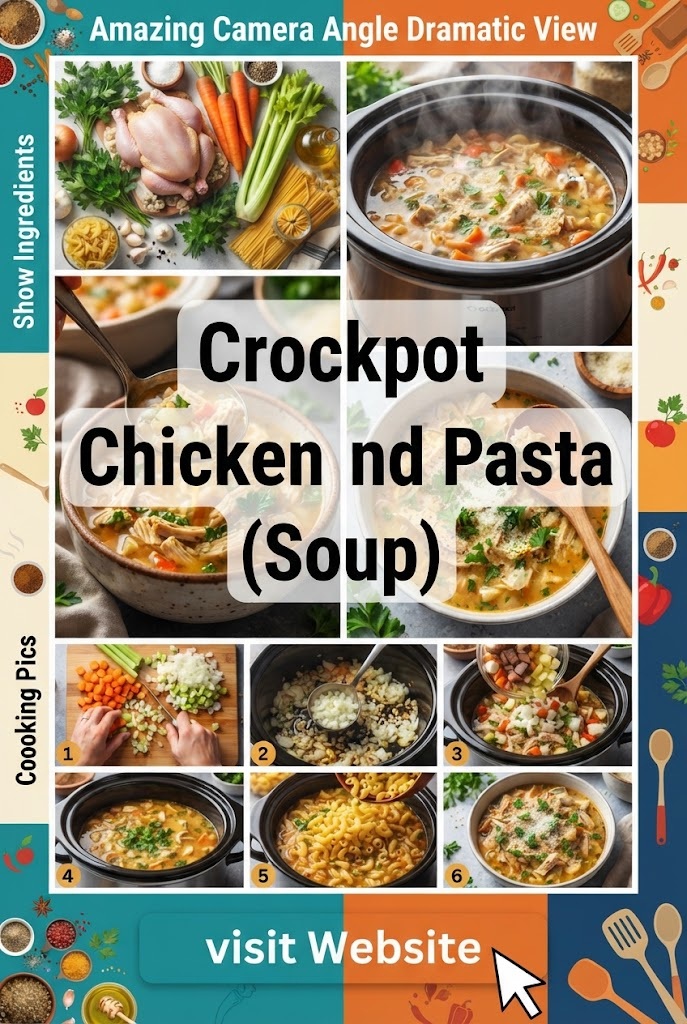
1. The Prep Work
Begin by prepping all your vegetables. Consistency in size is key; try to cut your carrots and celery into uniform pieces so they cook evenly. Place the chicken at the bottom of the Crockpot.
2. Layering the Flavors
Top the chicken with the diced onions, carrots, celery, and minced garlic. Sprinkle the dried herbs (thyme, oregano, bay leaves), salt, and pepper over the vegetables.
3. Adding the Liquid
Pour the chicken broth over the ingredients. The liquid should cover the chicken and vegetables by at least two inches. If you prefer a “stew-like” consistency, use less broth; for a traditional soup, stick to 8 cups.
4. The Slow Cook
Set your Crockpot to LOW for 6-7 hours or HIGH for 3-4 hours. While “High” is faster, the “Low” setting allows the chicken to reach a superior level of tenderness.
5. Shredding the Chicken
Once the cook time is up, remove the chicken from the pot and place it on a cutting board. Use two forks to shred the meat into bite-sized pieces. Discard any excess fat. Return the shredded chicken to the Crockpot.
6. The Pasta Phase
This is the most critical step. Switch the Crockpot to the HIGH setting. Add your uncooked pasta directly into the broth. Cover and cook for an additional 20-30 minutes, or until the pasta is al dente.
Note: Do not overcook the pasta in the Crockpot, as it will continue to soften as the soup sits.
7. The Finishing Touches
Turn off the heat. Remove the bay leaves. Stir in the fresh lemon juice and chopped parsley. Taste the broth and adjust the salt and pepper if necessary.
The “Pasta Problem”: How to Avoid Mushy Noodles
The number one complaint with slow cooker pasta soups is that the noodles become soggy or disintegrate. This happens because pasta is highly absorbent and continues to soak up liquid even after the heat is off.
To avoid this, you have two professional options:
- The Late-Addition Method: As described in the recipe above, only add the pasta in the last 20-30 minutes of cooking. This ensures the pasta is cooked by the residual heat of the broth without sitting in it for hours.
- The Separate-Boil Method: If you plan on having leftovers, cook the pasta separately on the stove in salted water. Store the pasta in a separate container and add a portion of noodles to individual bowls before pouring the hot soup over them. This prevents the noodles from sitting in the broth overnight and turning into a sponge.
Creative Variations to Try
Once you have mastered the basic recipe, you can begin to experiment with different flavor profiles.
1. Creamy Garlic Parmesan Chicken Pasta Soup
To make a decadent, creamy version of this soup, stir in 1 cup of heavy cream and 1/2 cup of freshly grated Parmesan cheese at the very end. The cheese adds a salty, nutty depth that pairs perfectly with the pasta.
2. Tuscan Chicken Soup
Add a can of drained cannellini beans and two cups of fresh baby spinach during the last 10 minutes of cooking. The beans add extra protein and fiber, while the spinach provides a burst of color and nutrients.
3. Zesty Lemon Ginger Chicken Soup
For a soup that feels like a “detox” or a health boost, add 1 tablespoon of freshly grated ginger and the zest of one lemon. This version is particularly effective during flu season.
4. Spicy Buffalo Chicken Pasta Soup
If you enjoy heat, stir in 1/4 cup of Buffalo wing sauce and a dash of cayenne pepper. Top the finished bowl with blue cheese crumbles for a soup version of the popular appetizer.
Nutritional Benefits: A Powerhouse in a Bowl
Crockpot Chicken and Pasta Soup is a remarkably balanced meal.
- Lean Protein: Chicken provides the essential amino acids needed for muscle repair and immune function.
- Complex Carbohydrates: The pasta and vegetables provide sustained energy.
- Hydration: The high water content in the broth helps maintain hydration levels.
- Vitamins and Minerals: Carrots provide Vitamin A (beta-carotene), while celery and onions offer Vitamin K and antioxidants.
By making the soup at home, you also control the sodium content. Store-bought canned soups are notorious for having astronomical levels of salt. In your Crockpot, you can use low-sodium broth and season with herbs and spices instead, making it a heart-healthy choice.
Meal Prep and Storage Advice
This soup is a meal-prepper’s dream, but there are some rules to follow to ensure it stays delicious.
Refrigeration
Store the soup in airtight containers for up to 4 days. If the pasta was cooked in the soup, expect it to be much softer the next day as it will have absorbed more broth. You may need to add a splash of water or extra broth when reheating.
Freezing
You can freeze chicken pasta soup, but there is a caveat: pasta does not freeze well in liquid. If you intend to freeze a large batch, it is best to freeze the “soup base” (chicken, broth, and veggies) and add freshly cooked pasta when you thaw and reheat it. The base will stay fresh in the freezer for up to 3 months.
Reheating
The best way to reheat this soup is on the stovetop over medium heat. This allows you to monitor the texture and prevent the chicken from becoming tough. Avoid the microwave if possible, as it can heat unevenly and make the pasta rubbery.
Essential Kitchen Tools for the Perfect Soup
While the Crockpot is the star of the show, a few other tools will make the process easier:
- A Sharp Chef’s Knife: For dicing those vegetables cleanly and efficiently.
- A Vegetable Peeler: Necessary for prepping carrots.
- Meat Claws or Sturdy Forks: For shredding the chicken with ease.
- A Large Ladle: To ensure you get a perfect ratio of broth, chicken, and pasta in every bowl.
- A 6-Quart or Larger Slow Cooker: This size is ideal for soup recipes, as it prevents overflow and allows for better heat circulation.
Troubleshooting Common Soup Issues
Even the most experienced home cooks run into trouble occasionally. Here is how to fix common problems:
The Soup is Too Salty
If you accidentally over-salted the broth, peel a raw potato and drop it into the soup for the last 30 minutes of cooking. The potato acts like a sponge, absorbing excess salt. Remove the potato before serving. Alternatively, add a splash of water or a pinch of sugar to balance the flavors.
The Broth is Too Thin
If you prefer a thicker, more “stew-like” soup, create a cornstarch slurry. Mix 1 tablespoon of cornstarch with 2 tablespoons of cold water until smooth. Stir this into the boiling soup (near the end of the cook time) and let it simmer for 5 minutes. The broth will thicken and become glossy.
The Chicken is Dry
This usually happens if you use chicken breasts and cook them on “High” for too long. To fix this, shred the chicken very finely so it can soak up as much broth as possible. Next time, try using chicken thighs or reducing the cook time.
The Flavor is “Flat”
If the soup tastes a bit boring, it likely needs acid or more salt. Start with a squeeze of lemon or a teaspoon of white wine vinegar. Acid acts as a flavor enhancer, brightening the other ingredients without making them sour.
What to Serve with Chicken and Pasta Soup
While this soup is a complete meal on its own, the right side dishes can turn it into a feast.
- Crusty Sourdough Bread: Perfect for dipping into the broth and cleaning the bowl.
- Garlic Bread: The buttery, garlicky notes complement the savory chicken.
- A Simple Green Salad: A light vinaigrette-dressed salad provides a crisp, fresh contrast to the warm, heavy soup.
- Roasted Vegetables: If you want even more greens, a side of roasted broccoli or asparagus works wonderfully.
The Cultural Significance of Chicken Soup
Across the globe, every culture has its version of this dish. In Italy, it’s Pollo e Pasta; in Jewish tradition, it’s “Jewish Penicillin” (usually with matzo balls, but often with noodles); in America, it’s the classic Chicken Noodle. There is something universal about the combination of poultry and grain.
By making this in a Crockpot, you are participating in a long tradition of “low and slow” cooking that dates back to the very first hearth fires. The slow cooker is simply the modern version of the heavy iron pot that used to hang over a fire all day. It reminds us that good things take time, and that the best meals are often the simplest ones.
Final Thoughts: The Joy of Slow Cooking
The Crockpot Chicken and Pasta Soup is more than just a recipe; it’s a lesson in patience and the power of simple ingredients. It teaches us that we don’t need expensive cuts of meat or exotic spices to create something that brings joy to the people we love.
Whether you are cooking for a sick friend, a busy family, or just for yourself on a cold Sunday afternoon, this soup is a reliable companion. It fills your home with warmth, your body with nutrients, and your soul with comfort. So, dust off your slow cooker, chop those carrots, and let the magic of low-heat cooking transform your kitchen.
The beauty of the Crockpot is that it does the hard work for you, allowing you to focus on what matters most: enjoying a delicious, steaming bowl of soup with the people you care about. Happy cooking!