
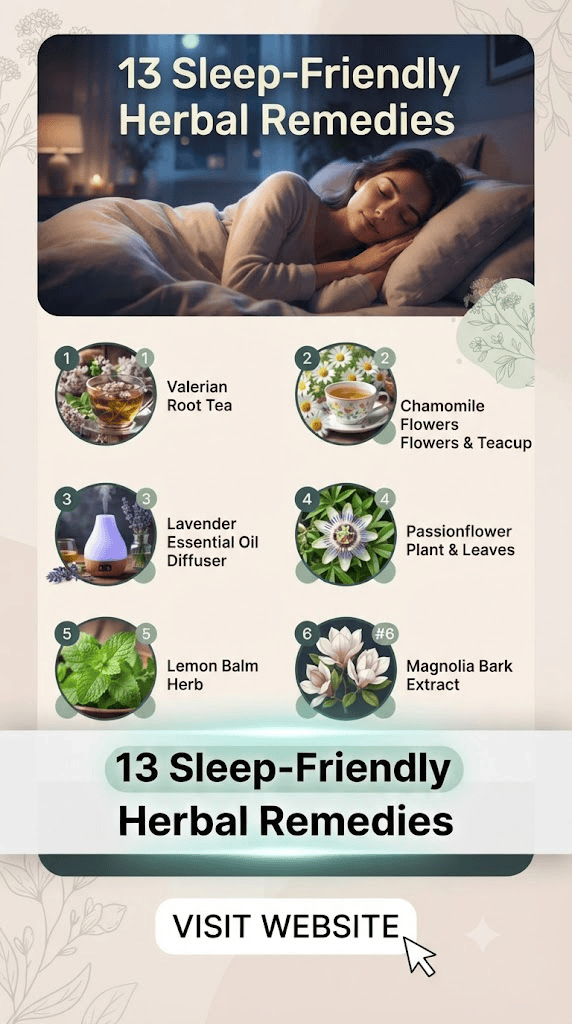
13 Sleep-Friendly Herbal Remedies
In an era defined by constant connectivity, blue light exposure, and high-stress lifestyles, the quest for a good night’s sleep has become a modern-day holy grail. While pharmaceutical interventions exist, many are turning back to the earth—seeking the gentle, time-tested wisdom of herbalism. For millennia, cultures across the globe have utilized specific plants to quiet the mind, soothe the nervous system, and signal to the body that it is time to drift into a deep, restorative slumber.
This comprehensive guide explores 13 of the most powerful sleep-friendly herbal remedies. We won’t just tell you what they are; we will dive deep into the science of how they work and provide detailed, gourmet-level recipes so you can craft these elixirs in your own kitchen.
1. Chamomile: The Golden Standard of Serenity
Chamomile is perhaps the most recognized sleep herb in the world. Specifically, German Chamomile (Matricaria chamomilla) contains a potent antioxidant called apigenin. This compound binds to specific receptors in your brain that may decrease anxiety and initiate sleepiness.
The Science
Apigenin acts similarly to benzodiazepines (anti-anxiety medication) by binding to GABA receptors, but without the risk of addiction or heavy morning grogginess. It creates a mild sedative effect that reduces the “chatter” of a busy mind.
Recipe: Honey-Vanilla Chamomile Sleep Infusion
This isn’t your standard tea bag in a mug. This is a concentrated, velvety infusion designed for maximum relaxation.
Ingredients:
- 3 tablespoons of high-quality dried whole chamomile flowers (organic is preferred).
- 1 Madagascar vanilla bean (split lengthwise) or 1 teaspoon of pure vanilla bean paste.
- 1 tablespoon of raw, local honey (manuka honey is also excellent).
- 2 cups of filtered water.
- A pinch of sea salt (to enhance the floral notes).
Detailed Preparation:
- Heat the Water: Bring 2 cups of filtered water to a gentle boil, then remove from heat for 30 seconds to let it drop to roughly 200°F (93°C). Boiling water can sometimes scorch the delicate essential oils in chamomile.
- The Steep: Place the dried chamomile flowers and the split vanilla bean into a ceramic teapot or a large glass jar. Pour the hot water over them.
- Cover Tight: This is the most crucial step. Cover the vessel immediately with a tight-fitting lid to trap the volatile oils (the medicinal part) from escaping through the steam.
- Duration: Let the infusion steep for a full 10 to 12 minutes.
- Strain and Season: Strain the golden liquid through a fine-mesh sieve into your favorite mug. Scrape the seeds from the vanilla bean into the tea if using a whole bean.
- The Finish: Stir in the honey and the pinch of salt while the liquid is warm but not scalding. Sip slowly 30 minutes before bed.
2. Valerian Root: Nature’s Valium
Valerian (Valeriana officinalis) is a heavy hitter in the world of herbal sedatives. Used since the days of ancient Greece and Rome, it is famous for its pungent, earthy odor and its profound ability to reduce the time it takes to fall asleep.
The Science
Valerian root increases the amount of gamma-aminobutyric acid (GABA) in the brain. GABA is an inhibitory neurotransmitter that blocks brain signals and decreases nervous system activity. By inhibiting the enzyme that breaks down GABA, Valerian ensures your brain stays in a “calm” state longer.
Recipe: Deep Earth Valerian & Cinnamon Decoction
Because Valerian root is a “rhizome” (a woody root), a simple steep isn’t enough. It requires a decoction—a slow simmer—to extract its sedative compounds.
Ingredients:
- 2 teaspoons of dried, chopped Valerian root.
- 1 Ceylon cinnamon stick (to mask the pungent aroma and balance blood sugar).
- 1/2 inch of fresh ginger root, sliced.
- 2.5 cups of filtered water.
- Optional: A splash of unsweetened almond milk.
Detailed Preparation:
- Combine: Place the Valerian root, cinnamon stick, and ginger slices into a small stainless steel saucepan.
- Simmer: Add the water and bring to a boil. Once boiling, immediately reduce the heat to the lowest possible setting.
- The Slow Cook: Cover the pot with a lid and let it simmer gently for 15 to 20 minutes. The liquid should reduce by about 20%.
- Cooling: Remove from heat and let it sit, still covered, for another 5 minutes.
- Strain: Strain into a mug. The liquid will be dark and earthy.
- Whiten (Optional): Add a splash of almond milk if the flavor is too intense. The cinnamon and ginger work together to transform the “sock-like” smell of valerian into a pleasant, spicy tonic.
3. Lavender: The Aromatic Nervous System Soother
While many use lavender topically, ingesting culinary-grade lavender can have a significant impact on sleep quality. Lavender (Lavandula angustifolia) contains linalool and linalyl acetate, which are rapidly absorbed and exert a calming effect on the central nervous system.
The Science
Studies have shown that lavender can increase the percentage of deep, slow-wave sleep. It also interacts with the neurotransmitter glutamate to reduce agitation and restlessness.
Recipe: Midnight Lavender Oat Milk Latte
This recipe combines the calming power of lavender with the tryptophan found in oats.
Ingredients:
- 1 teaspoon of dried culinary-grade lavender buds.
- 1.5 cups of creamy oat milk.
- 1 teaspoon of maple syrup or agave.
- 1/4 teaspoon of ground nutmeg (a natural sedative in small doses).
- 1 drop of food-grade lavender extract (optional for extra potency).
Detailed Preparation:
- The Infusion: In a small saucepan, combine the oat milk and the lavender buds.
- Gentle Heat: Heat the milk over medium-low heat. Do not let it reach a rolling boil, as this can curdle the milk and make the lavender taste “soapy.” You want it to be steaming and just starting to bubble at the edges.
- The Steep: Turn off the heat, cover, and let the lavender steep in the warm milk for 7 minutes.
- Strain: Pour the milk through a fine strainer to remove all lavender buds.
- Froth: If you have a milk frother, froth the lavender-infused milk until it creates a thick foam.
- Assemble: Stir in the maple syrup and top with a dusting of ground nutmeg. Drink this while warm for an immediate “cladding” of the nervous system.
4. Passionflower: For the Overactive Mind
Passionflower (Passiflora incarnata) is the go-to herb for those who lie awake with a “racing mind.” It is specifically effective for anxiety-induced insomnia and circular thinking.
The Science
Passionflower boosts the levels of GABA in your brain. Clinical trials have shown that passionflower is as effective as some pharmaceutical oxazepam for managing generalized anxiety, but without the daytime impairment.
Recipe: The “Mind-Quiet” Passionflower & Peppermint Iced Elixir
Some people prefer a refreshing drink before bed rather than a hot tea. This recipe provides a crisp, cooling way to ingest this powerful sedative.
Ingredients:
- 2 tablespoons of dried passionflower leaves and flowers.
- 1 tablespoon of dried peppermint leaves (to aid digestion).
- 2 cups of boiling water.
- 1 teaspoon of fresh lemon juice.
- Ice cubes.
Detailed Preparation:
- Steep: Place passionflower and peppermint in a heat-proof glass jar. Pour the boiling water over the herbs.
- Extraction: Cover and steep for at least 15 minutes. For a stronger sedative effect, you can steep for up to 30 minutes.
- Sweeten and Acidify: While the tea is still warm, stir in your preferred sweetener (if any) and the lemon juice. The lemon helps brighten the earthy taste of the passionflower.
- The Chill: Let the mixture cool to room temperature, then pour over a tall glass filled with ice.
- Usage: Sip this slowly starting two hours before you intend to sleep. It helps the transition from a “work brain” to a “rest brain.”
5. Lemon Balm: The Gentle Mood Lifter
Lemon Balm (Melissa officinalis) is a member of the mint family. It has been used since the Middle Ages to reduce stress and anxiety and promote sleep. It is particularly helpful for those whose sleep is disrupted by digestive upset or “butterflies” in the stomach.
The Science
Lemon balm contains rosmarinic acid, which inhibits the enzyme GABA transaminase. By stopping the breakdown of GABA, lemon balm helps maintain a state of relaxation.
Recipe: Lemon Balm & Rose Petal “Sleepy Syrup”
This concentrated syrup can be made in batches and added to warm water or taken by the spoonful.
Ingredients:
- 2 cups of fresh lemon balm leaves (tightly packed) or 1 cup of dried.
- 1/2 cup of dried food-grade rose petals.
- 1 cup of filtered water.
- 1 cup of raw honey.
Detailed Preparation:
- The Decoction: Add the lemon balm and rose petals to a pot with 1 cup of water.
- Simmer Down: Bring to a simmer, then cover and reduce heat. Let it simmer until the liquid has reduced by half (you should be left with about 1/2 cup of very strong tea).
- Strain: Press the herbs firmly in a sieve to extract every drop of liquid. Discard the herbs.
- The Honey Blend: While the liquid is still warm (but not boiling), stir in the honey. The honey acts as a natural preservative and carrier for the herbs.
- Storage: Pour into a sterilized glass bottle and store in the refrigerator for up to 2 months.
- To Use: Add 2 tablespoons of this syrup to a cup of warm water or take it directly off the spoon 45 minutes before bed.
6. Ashwagandha: The Stress-Adaptogen
Ashwagandha (Withania somnifera) is a cornerstone of Ayurvedic medicine. Its botanical name, somnifera, literally means “sleep-inducing.” As an adaptogen, it helps the body manage cortisol—the “stress hormone” that often keeps us awake.
The Science
Unlike direct sedatives, Ashwagandha works by regulating the HPA axis (Hypothalamic-Pituitary-Adrenal). By lowering serum cortisol levels, it prevents the “tired but wired” feeling that keeps many people staring at the ceiling.
Recipe: Traditional Ayurvedic Moon Milk
This is the ultimate nighttime ritual, combining healthy fats with the grounding power of Ashwagandha.
Ingredients:
- 1 teaspoon of organic Ashwagandha powder.
- 1 cup of whole milk or coconut milk (fats are essential for absorbing the herb).
- 1/2 teaspoon of ground turmeric.
- 1/4 teaspoon of ground cardamom.
- 1 teaspoon of ghee or coconut oil.
- A pinch of black pepper (to activate the turmeric).
Detailed Preparation:
- Heat: In a small saucepan, bring the milk to a low simmer.
- Whisk: Add the Ashwagandha, turmeric, cardamom, and black pepper. Whisk vigorously to remove any clumps.
- Enrich: Stir in the ghee or coconut oil. The fats help the active compounds (withanolides) pass through the blood-brain barrier.
- Cook: Let the mixture simmer on very low heat for 5 minutes.
- Serve: Pour into a mug and drink warm. The taste is earthy and spicy, providing a grounding sensation that signals the end of the day.
7. Magnolia Bark: The Ancient Cortisol Blocker
Magnolia Bark has been a staple in Traditional Chinese Medicine (TCM) for centuries. It is prized for its ability to “descend the Qi” and calm the spirit.
The Science
The bark contains two primary polyphenols: honokiol and magnolol. These compounds are incredibly effective at reducing cortisol levels and acting on GABA receptors. Some research suggests it can be more potent than lavender for some individuals.
Recipe: Magnolia Bark & Ginger Sleep Tincture (Water-Based)
While many tinctures use alcohol, a water-based concentrated decoction is more accessible for immediate use.
Ingredients:
- 1 tablespoon of dried Magnolia bark (shredded).
- 1 cinnamon stick.
- 3 cups of water.
- 1 tablespoon of goji berries (for added antioxidants and a hint of sweetness).
Detailed Preparation:
- Combine: Place the bark, cinnamon, and goji berries in a pot.
- Boil and Reduce: Add 3 cups of water. Bring to a boil and then lower the heat.
- The Reduction: Simmer uncovered until the liquid has reduced to about 1 cup. This creates a very concentrated “shot” of the herb.
- Strain: Strain the liquid through a cheesecloth, squeezing the bark to get the resins out.
- Usage: Drink this concentrated 1-cup “shot” 1 hour before bed. It has a slightly bitter, woody taste that is balanced by the cinnamon and goji.
8. California Poppy: The Non-Addictive Pain Reliever
Despite its name, California Poppy (Eschscholzia californica) is not an opiate. It is a gentle but effective sedative that is particularly useful for people who cannot sleep due to physical discomfort or restlessness.
The Science
The alkaloids in California Poppy act on GABA receptors and inhibit the breakdown of catecholamines (like adrenaline), helping the body stay in a relaxed state. It is considered safe even for children in appropriate dosages.
Recipe: The Golden Evening Elixir
This recipe uses the whole plant (leaves, flowers, and roots) for a full-spectrum effect.
Ingredients:
- 1 teaspoon of dried California Poppy.
- 1 teaspoon of dried Skullcap (another excellent sedative herb).
- 1/2 cup of tart cherry juice (contains natural melatonin).
- 1/2 cup of warm water.
Detailed Preparation:
- The Tea: Steep the California Poppy and Skullcap in 1/2 cup of boiling water for 15 minutes.
- The Blend: Once the tea is steeped and strained, let it cool slightly.
- The Mix: Combine the herbal tea with the 1/2 cup of tart cherry juice.
- The Science of the Mix: The tart cherry juice provides a natural source of melatonin, while the herbs provide the sedative foundation. Together, they tackle sleep from two different biological pathways.
- Consumption: Drink this mixture about 45 minutes before turning out the lights.
9. Mugwort: The Dream Herb
Mugwort (Artemisia vulgaris) has a mystical reputation. In many traditions, it is used not just to induce sleep, but to enhance the vividness of dreams and the ability to remember them.
The Science
Mugwort has mild sedative properties, but its most interesting effect is on the REM (Rapid Eye Movement) cycle. It appears to slightly alter the depth of REM sleep, leading to more “active” dreaming phases.
Recipe: The “Dream Weaver” Nightcap
Warning: This tea is bitter. We use aromatic herbs to make it more palatable.
Ingredients:
- 1 teaspoon of dried Mugwort.
- 1 teaspoon of dried Elderberries (for sweetness and immune support).
- 1/2 teaspoon of dried orange peel.
- 1 cup of boiling water.
- A teaspoon of honey.
Detailed Preparation:
- The Infusion: Combine mugwort, elderberries, and orange peel in a tea infuser.
- Steep: Pour boiling water over the mixture. Cover and steep for no more than 8 minutes. Steeping mugwort for too long can make it excessively bitter.
- Strain and Sweeten: Remove the herbs and stir in the honey.
- Ritual: Drink this while journaling or reflecting on your day. It is best used by those who want to explore their subconscious through dreaming.
10. Hops: The Bitter Sleep Aid
Hops (Humulus lupulus) aren’t just for beer. The female flowers of the hops plant contain a potent sedative called lupulin.
The Science
The sedative effect of hops comes from its ability to lower body temperature. A drop in core body temperature is one of the primary physiological triggers that tells the brain it is time to sleep.
Recipe: Hops & Hibiscus Cooling Brew
Hops can be very bitter, so we balance them with the tartness of hibiscus.
Ingredients:
- 1/2 teaspoon of dried hops flowers (a little goes a long way!).
- 1 tablespoon of dried hibiscus flowers.
- 1 teaspoon of dried lemongrass.
- 2 cups of water.
Detailed Preparation:
- Boil: Bring the water to a boil.
- Infuse: Add the hops, hibiscus, and lemongrass.
- Timing: Steep for exactly 5 minutes. If you go longer, the hops will dominate the flavor profile with an intense bitterness.
- Strain: Strain into a large glass or mug.
- Serving: This tea is excellent either hot or chilled. The lemongrass adds a citrusy note that cuts through the hops, making it a very refreshing evening drink.
11. Holy Basil (Tulsi): The Cortisol Crusher
Holy Basil, or Tulsi, is known in India as the “Queen of Herbs.” It is an adaptogen that specifically targets emotional stress and physical exhaustion.
The Science
Tulsi helps the body maintain homeostasis. It contains compounds like eugenol and ursolic acid which have been shown to reduce cortisol and increase the activity of antioxidant enzymes like superoxide dismutase.
Recipe: Tulsi & Cardamom Infusion
This is a fragrant, warming tea that feels like a hug for your nervous system.
Ingredients:
- 1 tablespoon of dried Tulsi (Krishna or Rama variety).
- 3-4 green cardamom pods, crushed.
- 1 slice of fresh lemon.
- 1.5 cups of water.
Detailed Preparation:
- Crush the Pods: Use the back of a spoon to crack the cardamom pods. This releases the essential oils within the seeds.
- Steep: Place the Tulsi and cardamom in a teapot. Pour boiling water over them.
- Wait: Steep for 10 minutes, covered.
- Brighten: Strain into a mug and add the slice of lemon.
- Benefit: This tea is perfect for those who feel “frazzled” at the end of the day. It doesn’t knock you out immediately but gradually lowers your stress threshold until sleep becomes inevitable.
12. St. John’s Wort: Circadian Rhythm Support
While most famous for its use in treating mild-to-moderate depression, St. John’s Wort (Hypericum perforatum) is also a powerful ally for sleep, especially when related to seasonal changes.
The Science
St. John’s Wort influences the way the brain uses serotonin, dopamine, and norepinephrine. Most importantly for sleep, it has been shown to increase the production of nocturnal melatonin, helping to reset a “broken” circadian rhythm.
Recipe: The “Sunshine at Night” Tonic
Note: St. John’s Wort can interact with many medications (including birth control and antidepressants). Always consult a doctor before use.
Ingredients:
- 1 teaspoon of dried St. John’s Wort.
- 1 teaspoon of Lemon Balm (to synergetically boost the mood-lifting effects).
- 1 cup of hot water.
- A slice of fresh orange.
Detailed Preparation:
- Steep: Combine the herbs in a mug and pour hot water over them.
- Cover: Let it steep for 10 minutes.
- Strain: Strain and add the orange slice.
- Usage: This is most effective when taken consistently at the same time every evening for at least two weeks, as the effects on the circadian rhythm are cumulative.
13. Tart Cherry & Turmeric: The Anti-Inflammatory Nightcap
While tart cherry is a fruit and turmeric a spice, they are frequently used in herbalism for their medicinal properties. Often, sleep is elusive because of low-grade systemic inflammation or joint pain.
The Science
Tart cherries are one of the only natural food sources of melatonin. Turmeric contains curcumin, which reduces inflammation that can cause restlessness and “tossing and turning.”
Recipe: The Golden Cherry Mocktail
This is a modern herbalist’s favorite for athletic recovery and deep sleep.
Ingredients:
- 4 oz of pure, unsweetened Tart Cherry Juice.
- 4 oz of sparkling water or plain water.
- 1/2 teaspoon of high-quality turmeric powder.
- 1/4 teaspoon of ground ginger.
- A squeeze of fresh lime.
- 1/2 teaspoon of magnesium citrate powder (optional, for muscle relaxation).
Detailed Preparation:
- The Base: In a glass, whisk the turmeric, ginger, and magnesium powder into the tart cherry juice until fully dissolved.
- The Sparkle: Top with sparkling water.
- The Acid: Add the squeeze of lime to balance the tartness of the cherry.
- Serve: Stir well and drink 1 hour before bed. The combination of natural melatonin and anti-inflammatory compounds creates a powerful “shut down” signal for the body.
Important Safety Considerations
While herbal remedies are natural, they are also powerful. To ensure your safety:
- Consult a Professional: If you are pregnant, nursing, or taking prescription medications (especially blood thinners, antidepressants, or anti-seizure meds), speak with a healthcare provider before starting a new herbal regimen.
- Quality Matters: Always source organic, non-irradiated herbs. The potency of an herb depends heavily on how it was grown, harvested, and stored.
- Start Slow: Everyone’s body chemistry is unique. Start with a lower dose to see how your body reacts before moving to full-strength infusions.
- The “Clean Sleep” Foundation: Herbs work best when paired with good sleep hygiene—cool room temperature, no screens an hour before bed, and a consistent wake-up time.
Conclusion
The path to better sleep doesn’t always have to be found in a pill bottle. By turning to the garden and the apothecary, we can find gentle, effective solutions that work in harmony with our body’s natural rhythms. Whether it’s the cortisol-blocking power of Ashwagandha, the GABA-boosting effects of Valerian, or the melatonin-rich Tart Cherry, these 13 remedies offer a diverse toolkit for anyone seeking the gift of a peaceful night’s rest.
Experiment with these recipes, find the flavors and effects that resonate with your body, and reclaim your sleep—one sip at a time.