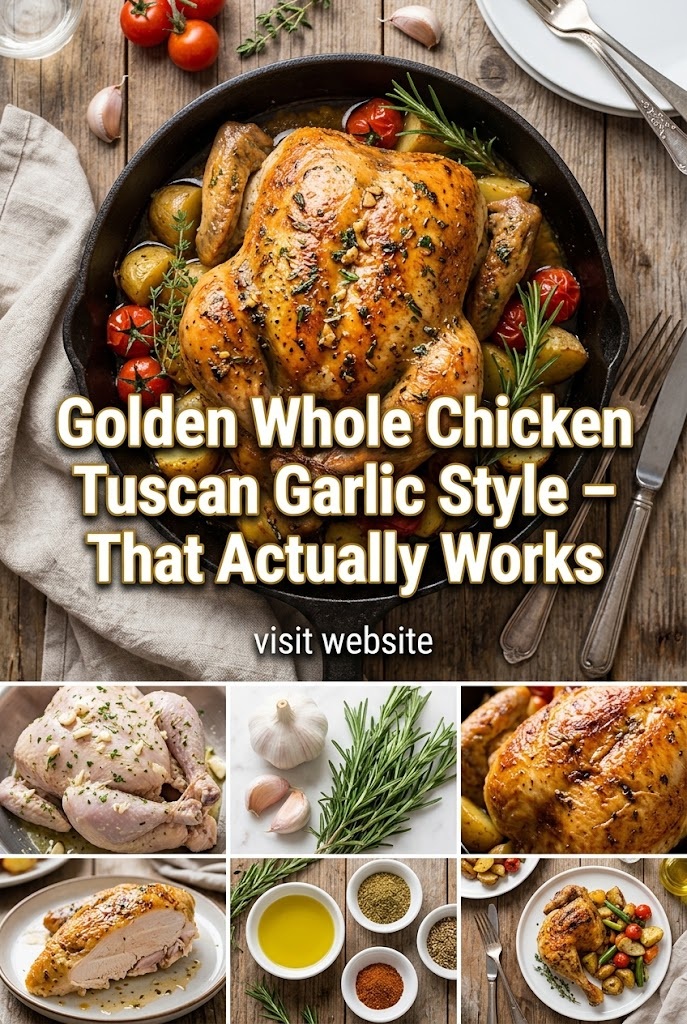
Golden Whole Chicken Tuscan Garlic Style – That Actually Works
There is a specific kind of magic that happens when a whole chicken is roasted to perfection. The skin becomes a crackling, golden-brown armor, the meat remains succulently juicy, and the aroma fills every corner of the home, signaling that a truly special meal is about to be served. However, many home cooks struggle with the “whole bird” challenge. Either the breast is dry while the legs are undercooked, or the skin is pale and flabby rather than crisp and savory.
Enter the Golden Whole Chicken Tuscan Garlic Style. This isn’t just another recipe; it is a culinary blueprint designed to solve every common roasting pitfall. Inspired by the rustic kitchens of central Italy, where simple ingredients—garlic, rosemary, lemon, and high-quality olive oil—transform humble poultry into a masterpiece, this method is refined for the modern kitchen to ensure it “actually works” every single time.
Why This Tuscan Garlic Method Changes Everything
In the hills of Tuscany, cooking is about the harmony of heat and fat. The “Tuscan Garlic Style” isn’t just about throwing a few cloves in the pan; it’s about infusing the fat of the chicken with the essence of alliums and herbs while maintaining a high-heat environment that encourages the Maillard reaction.
The Maillard reaction is the chemical process that gives browned food its distinctive flavor. By utilizing a specific dry-brining technique and a high-heat roasting strategy, we ensure that the sugars and amino acids on the chicken’s skin react perfectly, resulting in that coveted “Golden” finish.
The Secret Architecture: Selecting Your Bird
Before you even turn on the oven, the success of this dish depends on the quality of your chicken.
- Size Matters: For the best results, look for a “fryer” or “roaster” weighing between 3.5 and 4.5 pounds. Larger birds often take too long to cook, causing the outer meat to dry out before the center is done.
- Air-Chilled is King: Many commercial chickens are water-chilled, meaning they absorb excess moisture. When you roast them, that water leeches out, steaming the skin instead of crisping it. Air-chilled chicken has tighter skin and a deeper flavor.
- Room Temperature: Never put a cold bird into a hot oven. Taking the chicken out of the refrigerator 45 to 60 minutes before cooking allows the proteins to relax, ensuring even heat penetration.
The Ingredients: A Symphony of Simple Flavors
The beauty of Tuscan cuisine lies in its restraint. You do not need twenty spices; you need five or six high-quality ingredients.
- Whole Chicken (3.5–4 lbs): The canvas for your flavors.
- Fresh Garlic: You will need at least two whole heads. Tuscan style is bold.
- Fresh Rosemary and Sage: Dried herbs will not work here. The oils in fresh needles and leaves provide the aromatic punch.
- Extra Virgin Olive Oil: Use a robust, peppery oil if possible.
- Kosher Salt: The coarse grains are essential for the dry-brine process.
- Lemon: One large, zesty lemon for acidity and brightness.
- Unsalted Butter: To be tucked under the skin for localized basting.
The “Dry Brine” – The Secret to Golden, Crispy Skin
If you want a roast chicken that actually works, you must embrace the dry brine. Moisture is the enemy of crispiness.
At least 12 to 24 hours before you plan to cook, pat the chicken completely dry with paper towels. Rub a generous amount of Kosher salt all over the skin and inside the cavity. Leave the chicken uncovered in the refrigerator on a wire rack. This “open-air” treatment does two things: it allows the salt to penetrate deep into the muscle fibers for seasoning and moisture retention, and it dehydrates the skin. A dehydrated skin turns into a crisp, glass-like Golden crust when hit with heat.
Step-by-Step: Preparing the Tuscan Garlic Infusion
While the chicken is coming to room temperature, prepare your “Tuscan Paste.”
- The Garlic Base: Mince 6 cloves of garlic into a fine paste. Slice the remaining cloves from the two heads in half lengthwise—these will go in the roasting pan.
- The Herb Blend: Finely chop two tablespoons of fresh rosemary and one tablespoon of sage.
- The Emulsion: Mix the minced garlic, chopped herbs, and a tablespoon of softened butter with two tablespoons of olive oil. Add a heavy dose of cracked black pepper.
- The Aromatics: Halve your lemon and a few extra sprigs of rosemary. These will go inside the cavity to flavor the bird from the inside out.
The Roasting Technique: High Heat and Strategic Positioning
Many recipes call for 350°F (175°C), but for a true Tuscan Golden Chicken, we need more power.
1. The Prep
Preheat your oven to 425°F (220°C). If you have a heavy cast-iron skillet or a dedicated roasting pan, place it in the oven while it preheats. A hot pan ensures the dark meat of the legs starts cooking immediately upon contact.
2. Stuffing and Tucking
Stuff the lemon halves and rosemary sprigs into the cavity. Tuck the wingtips behind the back—this prevents them from burning and helps the bird sit flat.
3. The Under-Skin Rub
Carefully loosen the skin over the breast and thighs using your fingers. Slide a portion of your garlic-herb paste directly onto the meat. This ensures the flavor is locked into the protein, not just the skin.
4. The Searing Heat
Place the chicken in the preheated pan. You should hear a sizzle. Scatter the halved garlic cloves around the base of the chicken. These will roast in the chicken fat (schmaltz), turning into buttery “candy” that can be spread on bread later.
5. The Roast
Roast for approximately 50 to 60 minutes. Halfway through, rotate the pan to ensure even browning. If the skin is browning too quickly, you can loosely tent a piece of foil over the breast, but usually, at 425°F, the timing works out perfectly.
The Science of Internal Temperature
Do not rely on “clear juices” or “wiggling the leg.” If you want a chicken that actually works, use a digital meat thermometer.
- The Breast: Take it out when it hits 160°F (71°C). Carryover cooking will bring it to the FDA-recommended 165°F while it rests.
- The Thigh: The dark meat is more forgiving and tastes best at 175°F (80°C), where the collagen has fully broken down into gelatin.
The Crucial Rest: Patience is a Flavor
The most common mistake in home cooking is carving a chicken immediately after it leaves the oven. When meat is hot, the muscle fibers are tight and the juices are thin. If you cut it now, all that moisture will run out onto your cutting board, leaving the meat dry.
Allow the chicken to rest, uncovered (to keep the skin crisp), for at least 20 minutes. During this time, the fibers relax and reabsorb the juices. This is what makes the difference between a “good” roast chicken and a “world-class” one.
The Liquid Gold: Utilizing Pan Drippings
While the bird rests, look at your roasting pan. You have a combination of rendered chicken fat, caramelized garlic, and herb-infused juices. This is “Liquid Gold.”
- Simple Pan Sauce: Pour off most of the fat, leaving about two tablespoons. Place the pan over a medium burner. Add a splash of dry white wine (like a Vermentino or Pinot Grigio) to deglaze, scraping up the brown bits (the fond).
- Finishing: Whisk in a cold pat of butter and a squeeze of fresh lemon. Strain this over your carved chicken for an explosion of Tuscan flavor.
Perfect Pairings for Tuscan Garlic Chicken
To truly honor the Tuscan style, your side dishes should be equally rustic and thoughtful.
Roasted Rosemary Potatoes
Since the oven is already hot, toss halved fingerling potatoes with olive oil, salt, and rosemary. If you have space, roast them in the same pan as the chicken so they soak up the rendered schmaltz.
Polenta with Parmigiano-Reggiano
A creamy bed of polenta is the perfect vessel for the pan sauce. The cornmeal’s sweetness balances the pungent garlic and savory herbs.
Arugula and Shaved Fennel Salad
The richness of a golden roasted chicken needs acidity to cut through the fat. A simple salad of baby arugula, thinly sliced fennel, lemon juice, and high-quality olive oil provides a refreshing counterpoint.
Troubleshooting: Why Roasting Sometimes Fails
Even with the best intentions, things can go wrong. Here is how to fix common issues:
- Soggy Skin: This usually happens because the chicken wasn’t dry enough before going in, or the oven temperature was too low. Next time, double down on the air-drying in the fridge.
- Burnt Garlic: If the garlic cloves in the pan are turning black, add a few tablespoons of water or chicken stock to the pan to lower the surface temperature of the fat.
- Tough Meat: This is a sign of overcooking or failing to rest the bird. Trust your thermometer, not the clock.
The History of the “Pollo al Mattone” Influence
While this recipe is a standard roast, it draws inspiration from the Tuscan Pollo al Mattone (Chicken under a brick). In that traditional method, a chicken is split and weighted down. The “Golden Whole Chicken” version we’ve created here aims to replicate that extreme skin-to-heat contact and intense garlic infusion while keeping the bird whole for a more impressive table presentation. In Tuscany, garlic is often used in its “in camicia” (in its shirt) form—roasted in its skin—to provide a mellow, sweet flavor rather than a sharp bite.
Leftover Magic: The Gift That Keeps on Giving
A 4-pound chicken often provides more than one meal. The Tuscan Garlic style lends itself beautifully to leftovers.
- The Tuscan Chicken Salad: Shred the cold meat and mix with mayo, lemon zest, capers, and plenty of cracked pepper.
- Garlic Chicken Pasta: Sauté some kale or spinach, add the leftover chopped chicken and the roasted garlic cloves from the pan, and toss with rigatoni and a splash of pasta water.
- The Bone Broth: Never throw away the carcass. The roasted bones, already infused with rosemary and garlic, make the most incredible golden stock you will ever taste.
Nutritional Benefits of Garlic and Poultry
Beyond the taste, this dish is a powerhouse of nutrition.
- Garlic: Rich in allicin, known for its immune-boosting properties and cardiovascular benefits.
- Lean Protein: Roasted chicken is one of the most efficient ways to consume high-quality protein with minimal saturated fats, especially if you focus on the breast meat.
- Fresh Herbs: Rosemary and sage are packed with antioxidants and anti-inflammatory compounds.
Elevating the Presentation
When serving, do not just hack the bird apart. Use a sharp chef’s knife or poultry shears.
- Remove the legs and thighs first.
- Separate the drumstick from the thigh at the joint.
- Cut the breast meat off the bone in two large lobes, then slice them crosswise.
- Arrange the meat on a warmed platter, surrounded by the roasted garlic cloves and fresh sprigs of rosemary.
- Pour the pan juices over the meat at the very last second to keep the skin as crisp as possible.
The Essential Toolkit for Success
To ensure this recipe “actually works,” having the right equipment is non-negotiable:
- Instant-Read Thermometer: The difference between dry and juicy is often just 5 degrees.
- A Heavy Pan: Cast iron or tri-ply stainless steel retains heat better than thin aluminum.
- Kitchen Twine: While not strictly necessary, “trussing” the bird (tying the legs together) helps it cook more evenly by protecting the cavity.
- A V-Rack: If you have one, using a rack inside your roasting pan allows hot air to circulate under the bird, ensuring the skin on the bottom is just as golden as the top.
Conclusion: Mastering the Golden Standard
Mastering the Golden Whole Chicken Tuscan Garlic Style is a rite of passage for any home cook. It is a dish that relies on technique over gimmicks, and quality over quantity. By respecting the process—the dry brine, the high heat, the infusion of aromatics, and the mandatory rest—you transform a simple supermarket chicken into a culinary event.
This is a recipe that works because it respects the science of cooking. It addresses moisture control, temperature management, and flavor layering in a way that is accessible yet professional. The next time you want to impress guests or simply treat your family to a Sunday dinner they will never forget, remember the Tuscan way: keep it simple, keep it hot, and never skimp on the garlic.
The result will be a bird that isn’t just “cooked,” but one that is truly, magnificently Golden.